Introduction
The AI sector is experiencing exponential growth, powered by machine learning, generative AI, and advanced analytics. At the core of this transformation lies one essential foundation: databases. Whether training large AI models, serving predictions, or scaling intelligent applications, the efficiency and cost-effectiveness of database operations play a pivotal role.
Yet, as AI workloads grow more complex, organizations face significant challenges in cost attribution, performance bottlenecks, and scalability across SaaS database environments. Without proper visibility and control, companies risk spiraling cloud costs, reduced efficiency, and slower time-to-market.
This is where Enteros, a leader in AI-powered database performance management, steps in. Its flagship SaaS solution, Enteros UpBeat, helps enterprises in the AI sector optimize database performance, cost attribution, and financial governance while enabling faster, smarter AI innovation.
In this blog, we’ll explore how Enteros transforms the AI sector by ensuring database efficiency and transparency, and how it empowers organizations to align IT performance with business outcomes.
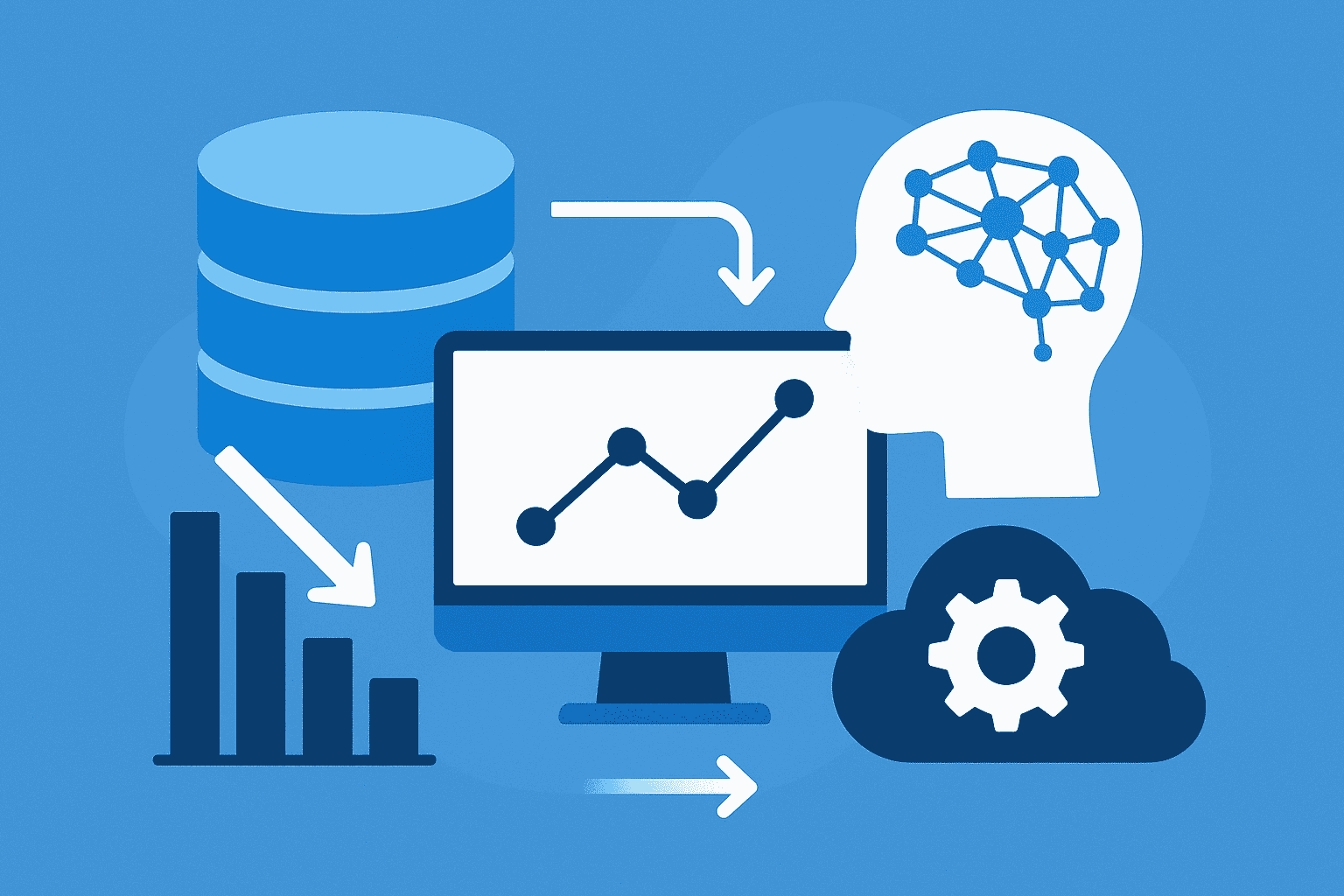
The Growing Demands of the AI Sector
1. Data-Intensive Workloads
AI models require enormous volumes of training data, and databases must handle petabyte-scale storage and real-time queries efficiently.
2. Rising Cloud Costs
AI workloads frequently rely on cloud-hosted SaaS databases. However, unpredictable scaling leads to ballooning costs, often without clear attribution to specific projects or teams.
3. Multi-Database Environments
Organizations run diverse databases—SQL, NoSQL, ML-specialized, and SaaS-native—to support different AI applications. Managing them holistically is complex.
4. Need for Cost Transparency
As AI innovation accelerates, CFOs and FinOps leaders demand better cost attribution models to assign expenses to projects, departments, or revenue streams.
5. Performance Bottlenecks
Even the smallest inefficiency in query optimization or indexing can lead to massive delays in AI model training or inference, directly impacting customer experience.
Enteros UpBeat: A SaaS Database Platform for AI Efficiency
Enteros UpBeat is a patented SaaS platform designed to proactively identify and resolve performance and scalability issues across multiple databases, including SaaS-native and AI-specialized environments.
It combines AI, AIOps, observability, and cloud FinOps principles to deliver database efficiency and cost visibility for organizations in the AI sector.
Core Features for the AI Sector
-
Cost Attribution and Forecasting
-
Provides granular cost attribution by project, model, or department.
-
Enables predictive cost estimation for future AI workloads.
-
Helps financial leaders manage cloud budgets more effectively.
-
-
AI-Driven Performance Optimization
-
Uses statistical learning algorithms to detect anomalies, seasonal trends, and spikes in performance metrics.
-
Automatically optimizes database queries and resource allocation.
-
-
SaaS Database Observability
-
Offers unified visibility into performance across SQL, NoSQL, ML databases, and SaaS platforms.
-
Correlates database health with AI application outcomes.
-
-
AIOps-Powered Root Cause Analysis
-
Automates troubleshooting for slow queries, storage bottlenecks, or scalability issues.
-
Reduces mean time to resolution (MTTR) from weeks to hours.
-
-
Alignment with RevOps Goals
-
Bridges the gap between IT, FinOps, and RevOps.
-
Ensures database investments and optimizations contribute directly to AI-driven revenue growth.
-
Real-World Use Cases in the AI Sector
1. Cost Attribution for AI Model Training
A global AI research firm used Enteros to track and attribute costs across multiple deep learning projects. By breaking down expenses by model and team, the company reduced cloud overspend by 30%, while improving accountability.
2. SaaS Database Optimization for Generative AI
An AI startup developing generative AI tools struggled with performance issues in its SaaS databases, slowing down content generation. Enteros UpBeat optimized queries and improved scalability, reducing latency by 50% and enhancing customer experience.
3. Predictive Cost Estimation for AI Deployments
A healthcare AI company using ML databases on SaaS platforms leveraged Enteros for forecasting cloud costs associated with scaling predictive analytics solutions. This avoided $20 million in potential overspending during expansion.
Benefits of Enteros for the AI Sector
-
Improved Database Performance: Faster AI training and inference cycles.
-
Granular Cost Attribution: Transparency into which teams or projects consume the most resources.
-
Cloud Cost Control: Optimized resource usage and reduced wastage.
-
Higher Productivity: Engineers spend less time troubleshooting and more time innovating.
-
RevOps Efficiency: Aligns AI investments with measurable revenue outcomes.
-
Scalability: Seamless support for large-scale, high-volume AI workloads.
Why Enteros Stands Out
-
Patented Technology – Unique statistical AI models for anomaly detection and optimization.
-
Multi-Database Support – Works across SaaS, SQL, NoSQL, and ML databases.
-
Proven Success in Data-Intensive Industries – Trusted by Fortune 500 companies in finance, healthcare, and technology.
-
Recognition by Analysts – Featured in Gartner’s Hype Cycles for cloud operations and observability.
Conclusion
The AI sector thrives on innovation, but that innovation cannot succeed without efficient, scalable, and cost-transparent database systems. Enteros UpBeat empowers organizations to enhance database performance, attribute costs accurately, and optimize SaaS environments for large-scale AI workloads.
By combining cost attribution, AIOps, and SaaS database observability, Enteros ensures that AI organizations not only accelerate innovation but also do so cost-effectively, aligning every technical decision with business value.
For AI-driven enterprises, adopting Enteros means a future where performance, cost efficiency, and revenue growth work hand-in-hand.
Frequently Asked Questions (FAQ)
Q1. How does Enteros improve database performance in the AI sector?
Enteros uses AI-driven anomaly detection and optimization to identify inefficiencies in database operations, reducing latency and improving query execution for AI applications.
Q2. What role does Enteros play in cost attribution?
It provides granular visibility into cloud and SaaS database spending, attributing costs to projects, teams, or AI models, ensuring accountability and better budget control.
Q3. Can Enteros help forecast AI workload costs?
Yes. Enteros includes predictive cost estimation tools that allow AI organizations to plan for scaling workloads while avoiding overspending.
Q4. Does Enteros work with SaaS-based databases?
Absolutely. Enteros is designed for SaaS-native environments and supports SQL, NoSQL, and ML databases used in AI workloads.
Q5. How does Enteros align with RevOps efficiency?
By linking database optimization with cost transparency and revenue goals, Enteros ensures that IT performance improvements directly contribute to AI-driven revenue growth.
Q6. Is Enteros scalable for large AI workloads?
Yes. Enteros can support petabyte-scale data environments and the performance requirements of advanced AI models, including generative AI.
The views expressed on this blog are those of the author and do not necessarily reflect the opinions of Enteros Inc. This blog may contain links to the content of third-party sites. By providing such links, Enteros Inc. does not adopt, guarantee, approve, or endorse the information, views, or products available on such sites.
Are you interested in writing for Enteros’ Blog? Please send us a pitch!
RELATED POSTS
What Are the Biggest Database Performance Challenges Facing Modern Banks?
- 4 September 2026
- Database Performance Management
Modern banks face serious database performance challenges in banking, including transaction bottlenecks, growing data volumes, slow queries, legacy infrastructure, cloud complexity, security requirements, scalability problems, and limited real-time visibility. These issues can delay payments, affect digital banking experiences, increase operational risk, and raise infrastructure costs. Effective database monitoring and optimization help banks maintain reliable, responsive … Continue reading “What Are the Biggest Database Performance Challenges Facing Modern Banks?”
How Can Banks Improve Database Performance for High-Volume Financial Transactions?
Banks can improve database performance for high-volume financial transactions by reducing query latency, optimizing indexes, balancing workloads, monitoring database behavior in real time, and identifying bottlenecks before they affect customers. A strong bank database performance strategy combines observability, capacity planning, automation, and intelligent database performance optimization to keep payment, trading, lending, and digital banking systems … Continue reading “How Can Banks Improve Database Performance for High-Volume Financial Transactions?”
What Are the Most Common Database Performance Issues in Healthcare IT Systems?
The most common database performance issues in healthcare include slow SQL queries, poor indexing, locking, blocking, high concurrency, storage latency, resource contention, execution-plan changes, database growth, and workload spikes. EHR database performance issues can slow clinical workflows and patient-facing systems. Enteros helps healthcare IT teams detect anomalies, investigate root causes, optimize SQL, and improve database … Continue reading “What Are the Most Common Database Performance Issues in Healthcare IT Systems?”
How Can Hospitals Improve Database Performance for Faster EHR and Clinical Workflows?
Improving hospital database performance requires continuous monitoring, SQL optimization, indexing, workload analysis, anomaly detection, root cause analysis, and proactive capacity planning. Hospitals should also track latency, locking, storage I/O, and resource utilization across EHR and clinical systems. Enteros helps healthcare IT teams use AI-powered observability and performance intelligence to improve reliability, responsiveness, scalability, and healthcare … Continue reading “How Can Hospitals Improve Database Performance for Faster EHR and Clinical Workflows?”