The retail sector is undergoing a profound transformation fueled by digital innovation, evolving consumer expectations, and the rapid adoption of cloud technologies. Modern retailers are no longer just selling products—they are delivering personalized, data-driven experiences across multiple channels, including eCommerce platforms, mobile apps, and physical stores.
However, this evolution introduces a complex challenge:
how to manage growth efficiently while ensuring high performance, controlling cloud costs, and leveraging advanced technologies like Generative AI.
Retail organizations often struggle with fragmented systems, inefficient database performance, rising cloud expenses, and limited visibility into operational metrics. These issues directly impact customer experience, revenue growth, and overall profitability.
This is where Enteros emerges as a powerful growth enabler.
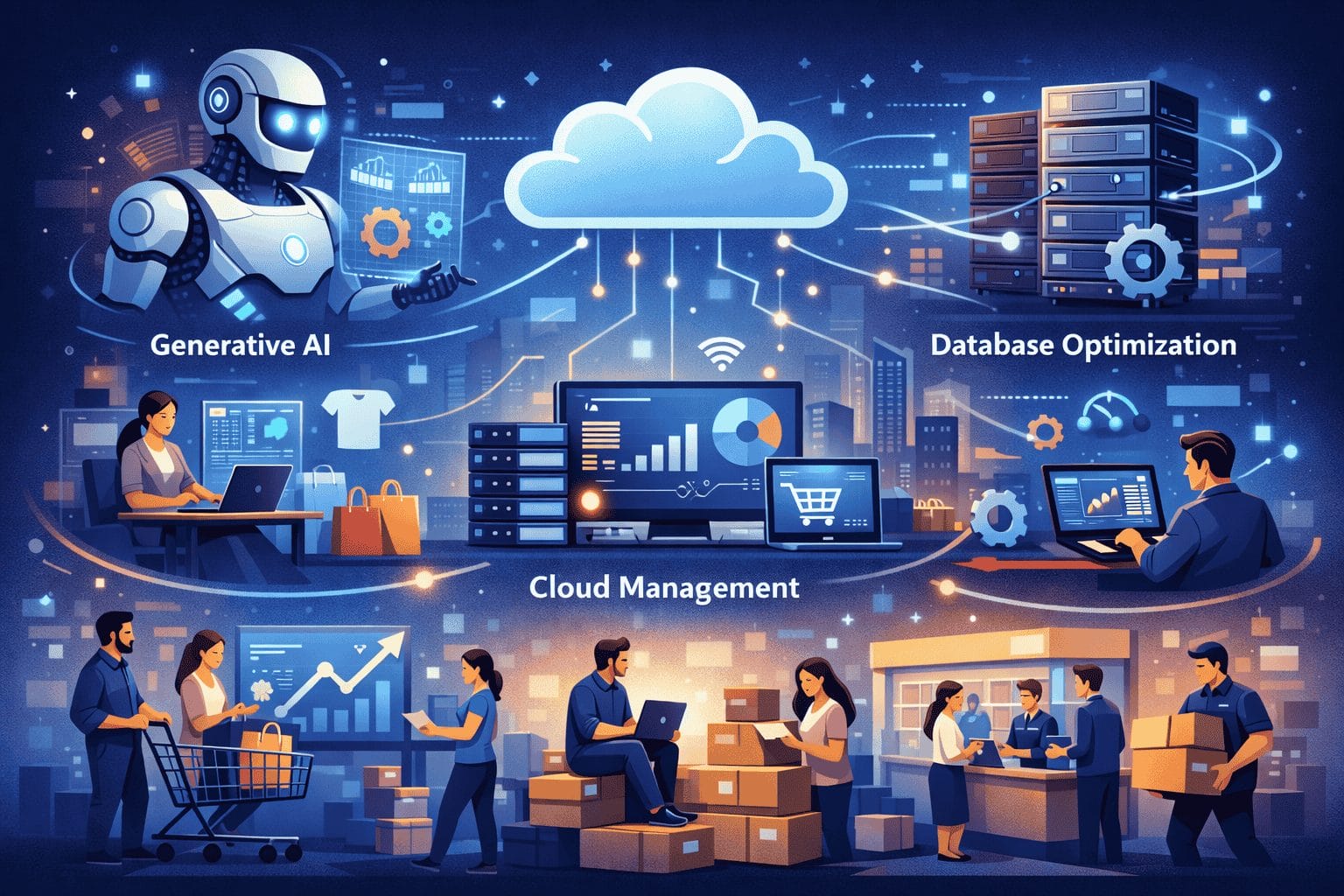
By integrating Generative AI, cloud management, and database optimization into a unified platform, Enteros empowers retailers to enhance performance, optimize costs, and drive sustainable growth.
1. The Complexity of Retail Growth in the Digital Era
Retail growth today is driven by multiple interconnected factors.
Key Drivers
- Expansion of omnichannel retail strategies
- Increasing demand for personalized customer experiences
- Real-time inventory and supply chain management
- Data-driven marketing and analytics
- Cloud-native infrastructure
Key Challenges
- Managing high volumes of data
- Ensuring system performance during peak traffic
- Controlling cloud infrastructure costs
- Integrating disparate systems
- Maintaining operational efficiency
Impact on Growth
- Reduced conversion rates
- Increased cart abandonment
- Lower customer satisfaction
- Declining profit margins
To overcome these challenges, retailers need intelligent, integrated solutions that combine AI, cloud optimization, and database performance management.
2. Generative AI: Unlocking Intelligent Retail Operations
Generative AI is transforming how retailers analyze data and interact with customers.
What is Generative AI?
Generative AI uses advanced algorithms to:
- Generate insights from large datasets
- Automate decision-making processes
- Enhance customer engagement
Challenges Without Generative AI
- Manual data analysis
- Limited personalization capabilities
- Slow decision-making
Enteros Generative AI Capabilities
- AI-driven performance insights
- Automated recommendations for optimization
- Predictive analytics for demand and behavior
Benefits
- Enhanced personalization
- Faster decision-making
- Improved operational efficiency
Generative AI enables retailers to turn data into actionable insights and competitive advantage.
3. Cloud Management: Controlling Costs and Scaling Efficiently
Cloud infrastructure is essential for modern retail operations.
Challenges in Cloud Management
- Rising cloud costs
- Overprovisioned resources
- Lack of cost visibility
- Complex multi-cloud environments
Enteros Cloud Management Capabilities
- Real-time cost monitoring
- Resource utilization tracking
- Cost allocation and attribution
- Optimization recommendations
Benefits
- Reduced cloud waste
- Improved financial control
- Scalable infrastructure
Effective cloud management ensures retailers can scale operations without compromising profitability.
4. Database Optimization: The Backbone of Retail Performance
Databases power every aspect of retail operations.
Key Functions
- Product catalog management
- Customer data storage
- Order processing
- Analytics and reporting
Challenges
- High data volumes
- Complex queries
- Performance bottlenecks
- Scalability issues
Enteros Database Optimization Capabilities
- Real-time performance monitoring
- Query optimization insights
- Resource utilization analysis
- Cross-platform observability
Outcomes
- Faster application performance
- Improved reliability
- Enhanced customer experience
Database optimization ensures that retail systems perform efficiently under all conditions.
5. Integrating AI, Cloud, and Database Optimization
The true strength of Enteros lies in its integrated approach.
Core Components
- Generative AI → Intelligent insights and automation
- Cloud Management → Cost control and scalability
- Database Optimization → Performance efficiency
Unified Outcomes
- End-to-end visibility across systems
- Proactive issue detection and resolution
- Data-driven decision-making
- Improved profitability
This integration allows retailers to manage growth holistically and effectively.
6. Enhancing Customer Experience Through Technology
Customer experience is the ultimate driver of retail success.
Key Improvements
1. Faster Website Performance
Reduces load times and improves engagement.
2. Seamless Checkout Experience
Minimizes friction and increases conversions.
3. Personalized Recommendations
Driven by AI insights.
4. Real-Time Inventory Updates
Ensures accurate product availability.
Enteros ensures that technological optimization translates into exceptional customer experiences.
7. Real-World Use Cases in Retail
1. eCommerce Platform Optimization
A retailer used Enteros to:
- Optimize database queries
- Improve application performance
Result:
- Faster load times
- Increased conversions
2. Cloud Cost Reduction
Enteros helped:
- Identify underutilized resources
- Optimize cloud workloads
Result:
- Significant cost savings
- Improved efficiency
3. AI-Driven Personalization
A retail brand:
- Leveraged Generative AI insights
Result:
- Improved customer engagement
- Higher sales
4. Inventory and Supply Chain Optimization
Enteros enabled:
- Real-time data processing
Result:
- Better inventory management
- Reduced stockouts
8. Strategic Benefits for Retail Organizations
1. Performance Excellence
Ensure fast and reliable systems.
2. Cost Optimization
Reduce unnecessary spending.
3. Data-Driven Decisions
Leverage AI insights for smarter strategies.
4. Scalability
Support growth without performance issues.
5. Customer Satisfaction
Deliver seamless shopping experiences.
6. Competitive Advantage
Stay ahead in a dynamic market.
9. The Future of Retail Growth with Enteros
The retail sector will continue to evolve with:
- AI-driven personalization
- Real-time analytics
- Omnichannel experiences
- Cloud-native architectures
Enteros is positioned to support this future by:
- Enabling intelligent automation
- Providing performance-aware insights
- Supporting continuous optimization
- Driving cloud efficiency
Retailers that adopt Enteros will achieve sustainable growth, improved efficiency, and enhanced customer experiences.
Conclusion
Retail growth management requires a comprehensive approach that integrates AI innovation, cloud efficiency, and database performance optimization.
Enteros delivers this transformation by combining:
- Generative AI for intelligent insights
- Cloud management for cost control
- Database optimization for performance excellence
By aligning technology with business goals, Enteros empowers retailers to:
- Improve performance
- Reduce costs
- Enhance customer experiences
- Drive revenue growth
In a competitive retail landscape, Enteros is not just a platform—it is a strategic driver of growth and digital transformation.
FAQ: Enteros, Generative AI, and Retail Growth
1. What is Enteros?
Enteros is a performance management and AIOps platform that optimizes database performance and cloud operations.
2. What is Generative AI in retail?
Generative AI helps analyze data, automate decisions, and enhance customer experiences.
3. Why is cloud management important for retail?
It ensures cost control, scalability, and efficient resource utilization.
4. How does Enteros improve database performance?
Through real-time monitoring and optimization insights.
5. Can Enteros reduce cloud costs?
Yes, by identifying inefficiencies and optimizing resource usage.
6. Who should use Enteros in retail?
- CIOs and CTOs
- DevOps teams
- FinOps professionals
- Retail managers
7. How does Enteros improve customer experience?
By ensuring fast, reliable systems and personalized interactions.
8. Is Enteros suitable for large retail platforms?
Yes, it is designed for scalable, data-intensive environments.
9. How does Enteros support growth management?
By integrating performance, cost management, and AI insights.
10. What makes Enteros unique?
Its unified approach combining Generative AI, cloud management, and database optimization.
The views expressed on this blog are those of the author and do not necessarily reflect the opinions of Enteros Inc. This blog may contain links to the content of third-party sites. By providing such links, Enteros Inc. does not adopt, guarantee, approve, or endorse the information, views, or products available on such sites.
Are you interested in writing for Enteros’ Blog? Please send us a pitch!
RELATED POSTS
What Should Healthcare IT Teams Know About AI-Driven Database Root Cause Analysis?
- 1 September 2026
- Database Performance Management
AI database root cause analysis helps healthcare IT teams identify why database performance problems occur by correlating SQL behavior, resource utilization, workload changes, wait events, locking, and historical patterns. Combined with AI database performance monitoring, it enables faster troubleshooting, earlier anomaly detection, and more proactive optimization. Enteros helps healthcare organizations investigate complex database issues before … Continue reading “What Should Healthcare IT Teams Know About AI-Driven Database Root Cause Analysis?”
How Can Hospitals Improve EHR Performance With AI-Powered Database Monitoring?
Improving EHR database performance requires continuous monitoring of SQL workloads, query latency, resource utilization, locking, wait events, and transaction patterns. AI-powered database monitoring helps hospitals detect anomalies, identify root causes, optimize inefficient queries, and anticipate capacity issues before clinicians are affected. Enteros provides intelligent database observability that helps healthcare IT teams improve EHR reliability, responsiveness, … Continue reading “How Can Hospitals Improve EHR Performance With AI-Powered Database Monitoring?”
How Does Cloud FinOps Help Banks Control Database Costs and Improve IT Efficiency?
FinOps for banks helps financial institutions control database costs by connecting cloud spending with actual workload usage, database performance, and business requirements. It enables cost visibility, accurate allocation, resource right-sizing, forecasting, and continuous optimization. Combined with database observability, database cost optimization for banks can reduce waste while protecting transaction speed, availability, scalability, security, and overall … Continue reading “How Does Cloud FinOps Help Banks Control Database Costs and Improve IT Efficiency?”
What Are the Best Ways to Improve Database Performance in Banking and BFSI?
Improving database performance in banking requires continuous database monitoring, SQL query optimization, intelligent indexing, capacity planning, anomaly detection, and proactive root cause analysis. Banks should also establish performance baselines and use AI-powered database observability to identify issues before transactions are affected. Enteros helps banking and BFSI organizations improve database reliability, scalability, efficiency, and transaction performance … Continue reading “What Are the Best Ways to Improve Database Performance in Banking and BFSI?”