Introduction
The financial sector is evolving rapidly in the era of digital-first services. Banks, investment firms, insurance providers, and fintech companies are managing unprecedented volumes of transactions, risk models, customer interactions, and compliance data. At the center of this transformation are SaaS databases, which power real-time trading platforms, digital banking, fraud detection systems, regulatory reporting, and customer engagement applications.
But as financial services become increasingly data-driven, database performance directly impacts profitability, compliance, and customer trust. Latency, inefficiencies, or downtime in mission-critical SaaS databases can mean millions in lost revenue or fines.
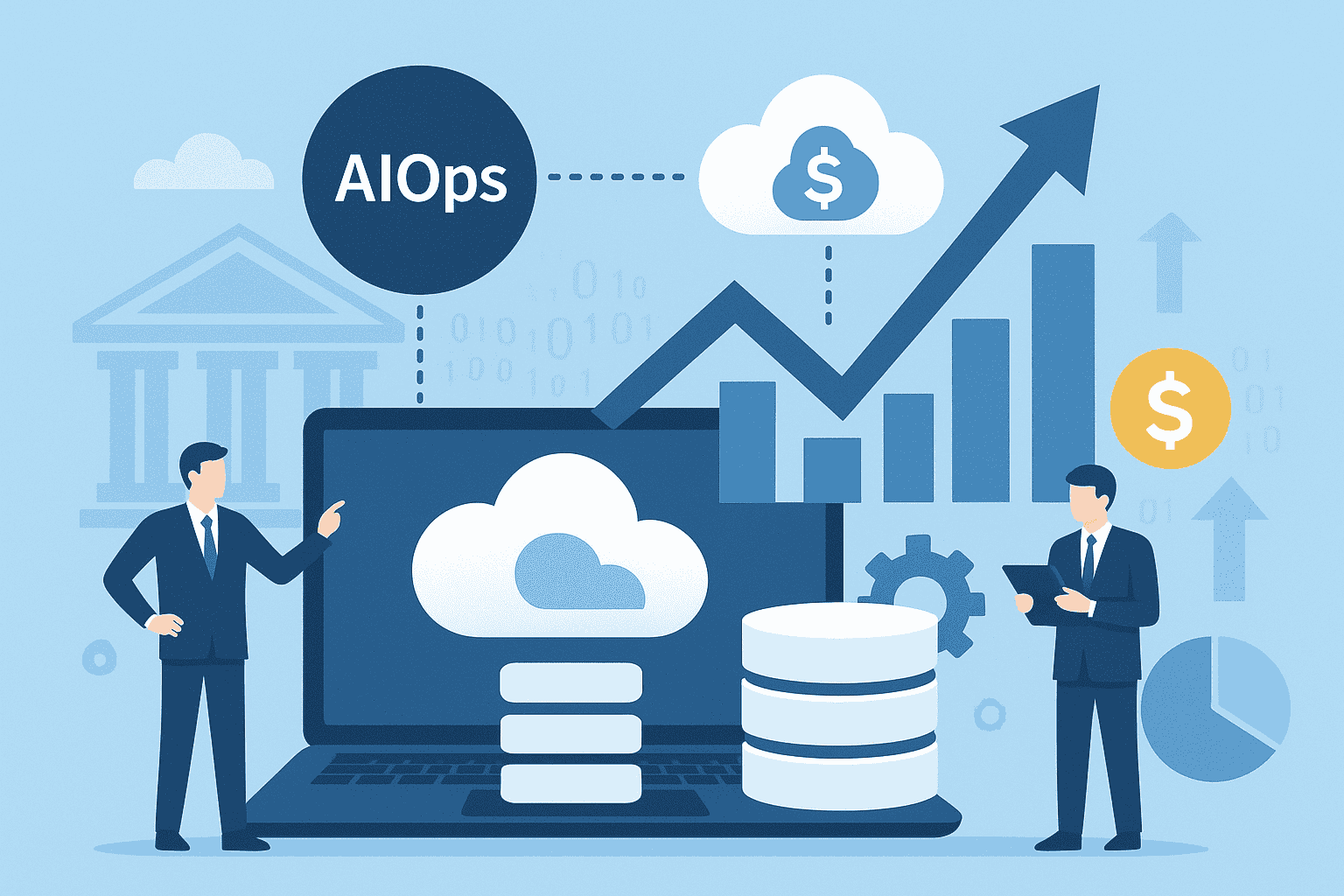
Enter AIOps platforms and Cloud FinOps practices, which together with Enteros UpBeat, enable financial institutions to optimize SaaS database performance, control costs, and align IT investments with business growth. This blog explores how Enteros’ patented platform empowers the financial sector to achieve operational excellence, enhance RevOps efficiency, and future-proof IT strategies.
1. Why SaaS Database Performance is Mission-Critical in Finance
SaaS databases in finance support:
-
Core banking systems: Deposits, payments, loans, and digital channels.
-
Trading platforms: High-frequency trading, portfolio management, and clearing systems.
-
Fraud detection and risk analysis: Real-time anomaly detection powered by AI.
-
Compliance and reporting: Regulatory requirements like Basel III, Dodd-Frank, and GDPR.
-
Customer engagement: CRM systems, chatbots, mobile banking apps.
When performance lags, the impacts are immediate:
-
Trading delays can result in financial losses worth millions.
-
Regulatory reporting errors may incur penalties.
-
Slow loan processing frustrates customers and reduces competitiveness.
-
Fraud detection lag increases exposure to financial crime.
For the financial sector, database performance is more than IT—it’s about trust, compliance, and revenue protection.
2. The Challenge: SaaS Database Complexity and Cloud Costs
Financial institutions are embracing SaaS for agility and scalability, but with it comes complexity:
-
Multi-database environments: RDBMS, NoSQL, time-series, and AI/ML databases.
-
Multi-cloud adoption: AWS, Azure, Google Cloud, and private data centers.
-
AI/ML workloads: Fraud detection, credit scoring, and market forecasting require heavy compute.
-
Cost unpredictability: Cloud bills spike during trading peaks or reporting deadlines.
-
Operational silos: Finance, IT, and business teams lack shared visibility.
The result? Rising costs, inefficient resource utilization, and performance risks that directly impact RevOps.
3. Enteros and AIOps for Database Performance
Enteros UpBeat, a patented SaaS-based AIOps platform, uses advanced AI algorithms to revolutionize SaaS database management in finance:
-
Proactive anomaly detection: Identifies abnormal spikes, latency, or resource bottlenecks across thousands of performance metrics.
-
Cross-platform monitoring: Supports diverse databases across RDBMS, NoSQL, AI-driven databases, and SaaS workloads.
-
Workload optimization: Improves query execution, load balancing, and throughput in trading and risk analysis systems.
-
Scalability prediction: Anticipates capacity needs during seasonal spikes like tax filing, IPO launches, or regulatory deadlines.
-
AI SQL optimization: Automates tuning for AI-driven analytics workloads, ensuring compliance and fraud systems run in real-time.
By leveraging AI and automation, Enteros helps financial firms stay ahead of performance issues before they disrupt business.
4. Cloud FinOps in the Financial Sector
Financial organizations face growing pressure to control cloud spending while ensuring compliance. Enteros enhances Cloud FinOps through:
-
Granular cost attribution: Allocates SaaS database costs to specific divisions (e.g., retail banking, wealth management, or compliance).
-
Forecasting & budgeting: Predicts future cloud spending during seasonal trading peaks or regulatory periods.
-
Rightsizing: Automatically scales up or down SaaS database resources to avoid over-provisioning.
-
Multi-cloud governance: Provides unified visibility across AWS, Azure, GCP, and hybrid systems.
This ensures that every IT dollar spent contributes directly to business outcomes, creating financial accountability in cloud usage.
5. Driving RevOps Efficiency with Enteros
Revenue Operations (RevOps) in finance requires seamless alignment of IT, operations, and business goals. Enteros enables RevOps efficiency by:
-
Accelerating time-to-market for new financial products (e.g., instant payments, robo-advisory platforms).
-
Reducing operational costs, freeing capital for innovation and growth.
-
Enhancing forecasting accuracy in financial planning and risk models.
-
Improving customer experience through reliable, real-time digital services.
By ensuring SaaS database performance and controlling cloud costs, Enteros directly links IT optimization to revenue growth and compliance readiness.
6. Real-World Use Cases in the Financial Sector
Case Study 1: Optimizing Trading Systems
A global investment bank faced slow transaction processing during high-volume trading sessions. Enteros’ AIOps platform identified hidden query bottlenecks, reducing transaction latency by 40%. This resulted in millions saved in trading opportunities.
Case Study 2: Cloud Cost Attribution in Retail Banking
A major retail bank struggled to allocate cloud spending across its digital banking and compliance divisions. Enteros introduced granular cost attribution, enabling the bank to cut overspending by 18% annually.
Case Study 3: AI Workload Optimization for Fraud Detection
A fintech company’s fraud detection AI models strained database performance. Enteros optimized AI SQL queries and workload distribution, ensuring fraud alerts were generated in real-time, improving fraud prevention rates by 25%.
7. Strategic Benefits of Enteros for the Financial Sector
-
Boost SaaS Database Performance: Faster, more reliable systems for trading, compliance, and customer apps.
-
Enhance AI Performance Management: Ensure fraud detection, credit scoring, and analytics workloads run seamlessly.
-
Enable Cloud FinOps: Financial accountability and cost savings across SaaS workloads.
-
Improve RevOps Efficiency: Tie IT investments to revenue protection and growth.
-
Future-Proof IT Infrastructure: Prepare for evolving regulations, digital banking trends, and AI innovation.
Conclusion
The financial sector thrives on trust, compliance, and agility. In an industry where milliseconds matter and costs must be tightly controlled, database performance and financial accountability cannot be left to chance.
Enteros UpBeat provides the AI-driven performance management and Cloud FinOps insights that financial institutions need to optimize SaaS database environments, control costs, and accelerate RevOps efficiency.
By uniting database operations, cloud cost governance, and revenue-driven outcomes, Enteros helps financial organizations not only survive but thrive in the digital age.
FAQ
1. How does Enteros improve SaaS database performance in the financial sector?
Enteros uses AI algorithms to detect anomalies, optimize workloads, and ensure databases supporting trading, compliance, and customer services run efficiently.
2. Can Enteros help financial firms reduce cloud costs?
Yes. Enteros provides forecasting, rightsizing, and granular cost attribution, enabling institutions to reduce overspending on SaaS database resources.
3. How does cost attribution benefit financial institutions?
It ensures cloud and SaaS database costs are transparently assigned to business units like retail banking, wealth management, or compliance, driving accountability.
4. Does Enteros support AI-driven financial applications?
Absolutely. Enteros optimizes AI SQL workloads powering fraud detection, credit scoring, and risk modeling systems.
5. How does Enteros enable RevOps efficiency in finance?
By improving database performance and aligning IT costs with revenue outcomes, Enteros accelerates product launches, reduces downtime, and enhances profitability.
6. Is Enteros suitable for multi-cloud financial strategies?
Yes. Enteros supports AWS, Azure, GCP, and hybrid environments, giving financial firms unified visibility across platforms.
The views expressed on this blog are those of the author and do not necessarily reflect the opinions of Enteros Inc. This blog may contain links to the content of third-party sites. By providing such links, Enteros Inc. does not adopt, guarantee, approve, or endorse the information, views, or products available on such sites.
Are you interested in writing for Enteros’ Blog? Please send us a pitch!
RELATED POSTS
What Are the Biggest Database Performance Challenges Facing Modern Banks?
- 4 September 2026
- Database Performance Management
Modern banks face serious database performance challenges in banking, including transaction bottlenecks, growing data volumes, slow queries, legacy infrastructure, cloud complexity, security requirements, scalability problems, and limited real-time visibility. These issues can delay payments, affect digital banking experiences, increase operational risk, and raise infrastructure costs. Effective database monitoring and optimization help banks maintain reliable, responsive … Continue reading “What Are the Biggest Database Performance Challenges Facing Modern Banks?”
How Can Banks Improve Database Performance for High-Volume Financial Transactions?
Banks can improve database performance for high-volume financial transactions by reducing query latency, optimizing indexes, balancing workloads, monitoring database behavior in real time, and identifying bottlenecks before they affect customers. A strong bank database performance strategy combines observability, capacity planning, automation, and intelligent database performance optimization to keep payment, trading, lending, and digital banking systems … Continue reading “How Can Banks Improve Database Performance for High-Volume Financial Transactions?”
What Are the Most Common Database Performance Issues in Healthcare IT Systems?
The most common database performance issues in healthcare include slow SQL queries, poor indexing, locking, blocking, high concurrency, storage latency, resource contention, execution-plan changes, database growth, and workload spikes. EHR database performance issues can slow clinical workflows and patient-facing systems. Enteros helps healthcare IT teams detect anomalies, investigate root causes, optimize SQL, and improve database … Continue reading “What Are the Most Common Database Performance Issues in Healthcare IT Systems?”
How Can Hospitals Improve Database Performance for Faster EHR and Clinical Workflows?
Improving hospital database performance requires continuous monitoring, SQL optimization, indexing, workload analysis, anomaly detection, root cause analysis, and proactive capacity planning. Hospitals should also track latency, locking, storage I/O, and resource utilization across EHR and clinical systems. Enteros helps healthcare IT teams use AI-powered observability and performance intelligence to improve reliability, responsiveness, scalability, and healthcare … Continue reading “How Can Hospitals Improve Database Performance for Faster EHR and Clinical Workflows?”