Preamble
PostgreSQL JOIN is used to extract data from multiple tables. PostgreSQL JOIN is executed whenever two or more tables are combined in an SQL statement.
There are different types of PostgreSQL connections:
- PostgreSQL INNER JOIN (or sometimes called a simple connection)
- PostgreSQL LEFT OUTER JOIN (or sometimes called LEFT JOIN)
- PostgreSQL RIGHT OUTER JOIN (or sometimes called RIGHT JOIN)
- PostgreSQL FULL OUTER JOIN (or sometimes called FULL JOIN)
So, let’s discuss the JOIN syntax in PostgreSQL, take a look at the visual illustrations of JOIN in PostgreSQL, and look at the JOIN examples.
INNER JOIN (simple connection)
Most likely, you have already written a query that uses PostgreSQL INNER JOIN. This is the most common type of connection. INNER JOIN returns all rows from multiple tables where the connection condition is met.
The syntax for INNER JOIN in PostgreSQL
SELECT columns
FROM table1
INNER JOIN table2
ON table1.column = table2.column;
Visual Illustration
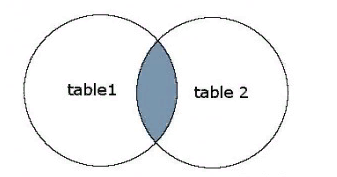
On this visual diagram, PostgreSQL INNER JOIN returns the shaded area:
PostgreSQL INNER JOIN will return records where table1 and table2 intersect.
Here is an example of INNER JOIN PostgreSQL
SELECT suppliers.supplier_id, suppliers.supplier_name, orders.order_date
FROM suppliers
INNER JOIN orders
ON.supplier_id = orders.supplier_id;
This PostgreSQL INNER JOIN example will return all rows from the suppliers and orders tables where the corresponding value supplier_id is present in the suppliers and orders tables.
Let’s take a look at some data to explain how internal connections work:
We have a table of suppliers with two fields (supplier_id and supplier_name).
It contains the following data:
|
supplier_id
|
supplier_name
|
|---|---|
|
10000
|
IBM
|
|
10001
|
Hewlett Packard
|
|
10002
|
Microsoft
|
|
10003
|
NVIDIA
|
We have another table called orders with three fields (order_id, supplier_id, and order_date). It contains the following data:
|
order_id
|
supplier_id
|
order_date
|
|---|---|---|
|
500125
|
10000
|
10.04.2019
|
|
500126
|
10001
|
20.04.2019
|
|
500127
|
10004
|
30.04.2019
|
If we run the PostgreSQL SELECT operator (which contains INNER JOIN) below:
SELECT suppliers.supplier_id, suppliers.supplier_name, orders.order_date
FROM suppliers
INNER JOIN orders
ON.supplier_id = orders.supplier_id;
Our result set will look like this:
|
supplier_id
|
name
|
order_date
|
|---|---|---|
|
10000
|
IBM
|
10.04.2019
|
|
10001
|
Hewlett Packard
|
20.04.2019
|
Rows for ‘Microsoft’ and ‘NVIDIA’ from the supplier table will be omitted because 10002 and 10003 supplier_id do not exist in both tables. Row for 500127 (order_id) from the orders table will be omitted because supplier_id 10004 does not exist in the supplier’s table.
Old syntax
In conclusion, it’s worth mentioning that the INGER JOIN PostgreSQL example above can be rewritten using the older implicit syntax as follows (but we still recommend using the INNER JOIN keyword syntax):
SELECT suppliers.supplier_id, suppliers.supplier_name, orders.order_date
FROM suppliers, orders
WHERE suppliers.supplier_id = orders.supplier_id;
LEFT OUTER JOIN
Another type of connection is called PostgreSQL LEFT OUTER JOIN. This type of connection returns all rows from tables with a left-hand connection specified in the ON condition, and only those rows from another table where the fields to be joined are equal (the connection condition is fulfilled).
The syntax for PostgreSQL LEFT OUTER JOIN
SELECT columns
FROM table1
LEFT OUTER JOIN table2
ON table1.column = table2.column;
Visual Illustration
On this visual diagram, PostgreSQL LEFT OUTER JOIN returns the shaded area:
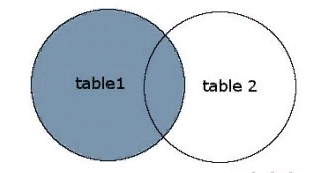
PostgreSQL LEFT OUTER JOIN will return all records from table1 and only those records from table2 that intersect with table1.
An example of PostgreSQL LEFT OUTER JOIN
SELECT suppliers.supplier_id, suppliers.supplier_name, orders.order_date
FROM suppliers
LEFT OUTER JOIN orders
ON.supplier_id = orders.supplier_id;
In this example, the LEFT OUTER JOIN will return all rows from the employee’s table and only those rows from the orders table where the combined fields are equal.
PostgreSQL: Inner Joins | Course
About Enteros
Enteros offers a patented database performance management SaaS platform. It proactively identifies root causes of complex business-impacting database scalability and performance issues across a growing number of clouds, RDBMS, NoSQL, and machine learning database platforms.
The views expressed on this blog are those of the author and do not necessarily reflect the opinions of Enteros Inc. This blog may contain links to the content of third-party sites. By providing such links, Enteros Inc. does not adopt, guarantee, approve, or endorse the information, views, or products available on such sites.
Are you interested in writing for Enteros’ Blog? Please send us a pitch!
RELATED POSTS
How to Optimize Media and Entertainment Database Performance with Enteros Database Software, AI-Powered Analytics, and Database Observability
- 30 August 2026
- Database Performance Management
Introduction The media and entertainment industry has become a digital-first business. Streaming services, digital publishing, online gaming content, advertising platforms, social experiences, content management systems, subscription platforms, and personalized recommendations all depend on databases. Modern media companies process enormous volumes of customer, content, advertising, transaction, and behavioral information. Read more”Indian Country” highlights Enteros and its … Continue reading “How to Optimize Media and Entertainment Database Performance with Enteros Database Software, AI-Powered Analytics, and Database Observability”
How to Optimize Manufacturing Database Performance with Enteros Database Software, AIOps, and Predictive Analytics
Introduction Manufacturing is becoming increasingly dependent on digital infrastructure. Modern factories use enterprise resource planning (ERP), manufacturing execution systems (MES), supply-chain platforms, warehouse management systems, industrial IoT, quality management applications, predictive maintenance, and advanced analytics to manage production. Behind these systems are databases processing enormous amounts of operational information. Production schedules, inventory levels, machine data, … Continue reading “How to Optimize Manufacturing Database Performance with Enteros Database Software, AIOps, and Predictive Analytics”
The Future of Industry-Specific Cloud Optimization with AIOps, FinOps, and AI-Powered Database Management
- 28 August 2026
- Database Performance Management
Introduction Cloud computing has become a foundational component of digital transformation across industries. Banking organizations use cloud platforms to support digital payments and online banking. Healthcare providers rely on cloud infrastructure for digital health applications and patient services. Educational institutions operate learning management systems and virtual classrooms in the cloud. Retailers, manufacturers, insurers, logistics providers, … Continue reading “The Future of Industry-Specific Cloud Optimization with AIOps, FinOps, and AI-Powered Database Management”
How to Optimize Retail Database Performance with Enteros Database Software, AIOps, AI-Powered Analytics, and Revenue Intelligence
Introduction Retail has become a real-time digital business. Ecommerce, mobile applications, point-of-sale systems, inventory platforms, loyalty programs, customer analytics, supply chain systems, recommendation engines, and payment platforms all depend on databases. Retailers also experience highly variable demand. Read more”Indian Country” highlights Enteros and its database performance management platform *Black Friday, holiday shopping, product launches, flash … Continue reading “How to Optimize Retail Database Performance with Enteros Database Software, AIOps, AI-Powered Analytics, and Revenue Intelligence”