Introduction
The healthcare industry is in the midst of a digital transformation, driven by the need for faster diagnostics, improved patient outcomes, and more efficient clinical workflows. From electronic health records (EHRs) and telemedicine platforms to AI-powered medical imaging and predictive analytics for disease prevention, healthcare organizations rely heavily on data. At the core of this data-driven ecosystem are databases, which store, process, and deliver mission-critical information.
However, with this reliance on data comes a unique set of challenges: database bottlenecks that can delay clinical decisions, cloud costs that spiral out of control, and increasingly complex IT infrastructures that hinder scalability. The stakes are high—inefficient database performance can literally mean the difference between life and death.
This is where Enteros UpBeat, a patented SaaS-based AIOps platform for database performance management, steps in. By combining AI SQL optimization, advanced observability, and anomaly detection, Enteros empowers healthcare providers to enhance database performance, reduce IT costs, and ensure healthcare professionals have timely access to accurate data.
In this blog, we’ll explore how Enteros is reshaping healthcare IT by aligning performance management with the needs of modern medical systems.
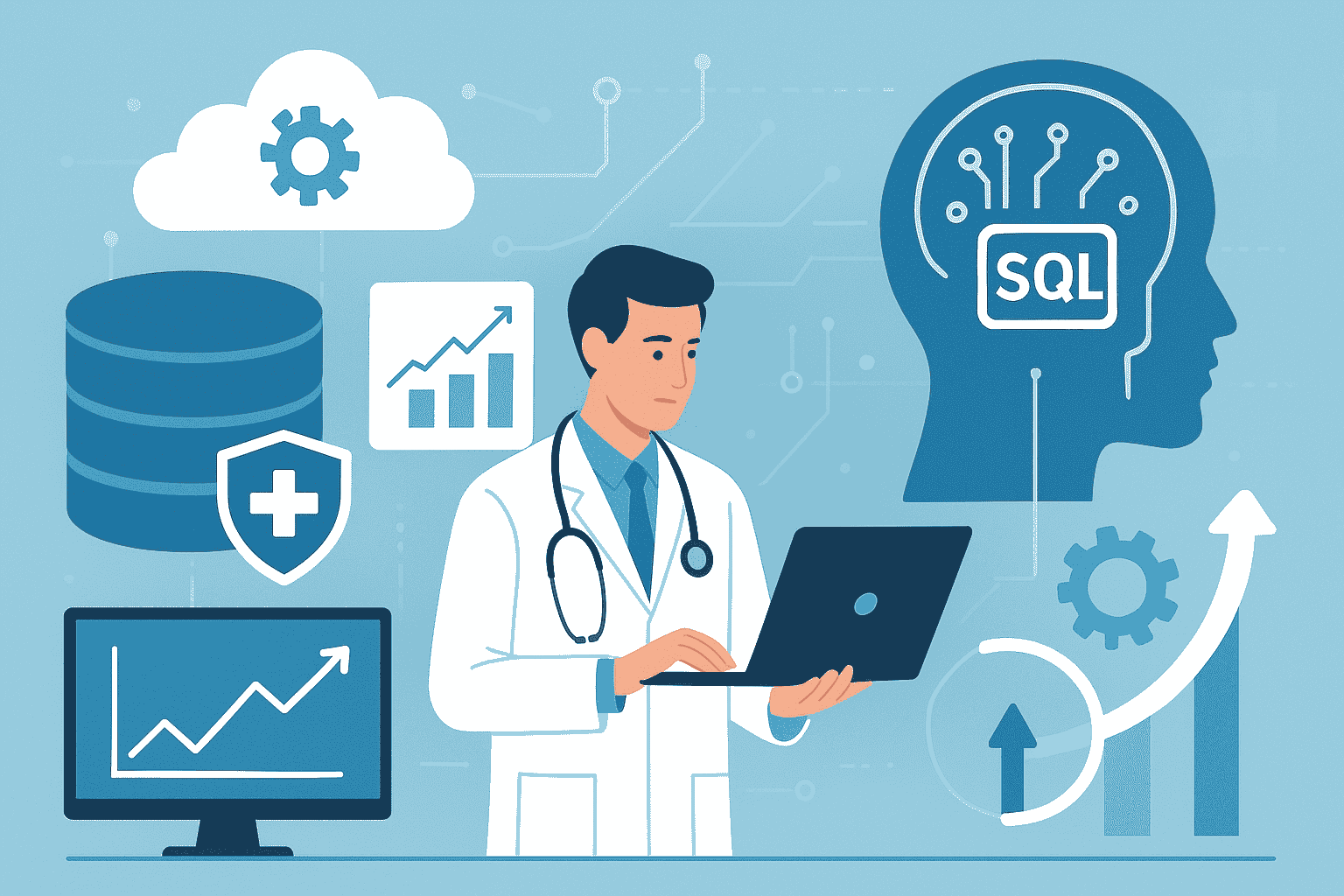
1. Why Database Performance Matters in Healthcare
Healthcare IT systems must operate with speed, accuracy, and reliability. Databases underpin:
-
Electronic Health Records (EHRs): Storing millions of patient records that clinicians must access instantly.
-
Telemedicine: Enabling real-time consultations that demand fast, secure, and scalable database performance.
-
AI-Powered Imaging: Supporting diagnostic algorithms that process terabytes of image data in seconds.
-
Pharmaceutical R&D: Managing massive datasets during clinical trials and drug discovery.
-
Billing & Insurance Systems: Processing millions of claims and transactions daily.
Even small inefficiencies—such as query delays or downtime—can lead to:
-
Delayed treatment decisions.
-
Compliance risks in HIPAA-regulated environments.
-
Frustration among clinicians and patients.
-
Financial losses due to claim processing delays.
In short, healthcare requires databases that operate at peak efficiency 24/7.
2. Challenges in Healthcare Database and IT Operations
Healthcare providers face several challenges in managing modern IT ecosystems:
-
Data Explosion
-
Genomic research, wearables, and IoT medical devices are generating massive datasets.
-
Traditional systems struggle to scale efficiently.
-
-
Regulatory Compliance
-
HIPAA, GDPR, and other regulations demand secure, auditable data flows.
-
Mismanaged database performance creates compliance risks.
-
-
Cloud Cost Escalation
-
Many healthcare providers overspend on underutilized cloud database resources.
-
Lack of visibility leads to wasted IT budgets.
-
-
Complexity of AI Workloads
-
Training AI models for predictive diagnosis or image recognition requires optimized databases.
-
Inefficiencies lead to delays in life-saving innovations.
-
-
Troubleshooting Inefficiencies
-
Traditional monitoring tools generate floods of alerts but lack precise root cause analysis.
-
Critical issues often take weeks to resolve, delaying clinical operations.
-
3. Enteros UpBeat: AI-Driven Database Performance Management
Enteros UpBeat transforms healthcare IT operations by applying AIOps intelligence to database performance.
Key Capabilities:
-
AI SQL Optimization
Automatically improves query efficiency, reducing response times for EHR lookups, claims processing, and diagnostic systems. -
Anomaly Detection
Identifies unusual workload spikes (e.g., during a flu outbreak or pandemic) by analyzing thousands of performance metrics against historical data. -
Root Cause Analysis
Pinpoints the origin of performance issues, drastically reducing Mean Time to Resolution (MTTR). -
Multi-Database Support
Works across RDBMS, NoSQL, and machine-learning databases used in AI healthcare applications. -
Scalability Forecasting
Predicts future database needs, allowing IT leaders to prepare for new patient data sources or AI-driven workloads.
With Enteros, healthcare providers move from reactive problem-solving to proactive performance management.
4. AI SQL and Its Role in Healthcare Efficiency
AI SQL is one of Enteros’ most powerful innovations. By applying artificial intelligence to SQL query optimization, Enteros helps healthcare IT teams:
-
Speed Up EHR Queries: Doctors get patient histories instantly instead of waiting for lagging systems.
-
Optimize Claims Processing: Insurance transactions execute faster, improving revenue cycle efficiency.
-
Enable Real-Time Analytics: Predictive models for patient readmission or disease spread run smoothly without database delays.
-
Reduce Infrastructure Costs: Efficient SQL reduces compute and storage needs, lowering cloud expenses.
In a world where every second counts in patient care, AI SQL ensures databases are not the bottleneck.
5. AIOps in Healthcare: Observability at Scale
Healthcare IT complexity demands more than traditional monitoring. Enteros’ AIOps platform provides:
-
Centralized Observability across hybrid and multi-cloud setups.
-
Proactive Alerts that highlight anomalies before they impact operations.
-
Predictive Insights that forecast spikes in usage, such as flu season increases in hospital admissions.
-
Cross-Team Collaboration by providing unified performance data to clinicians, IT teams, and administrators.
This level of observability ensures healthcare organizations are always prepared, compliant, and efficient.
6. Real-World Use Cases of Enteros in Healthcare
Case Study 1: Optimizing EHR Performance
A large hospital network struggled with slow patient record lookups. Enteros applied AI SQL optimization, cutting query times by 40%. This reduced clinician frustration and improved patient care efficiency.
Case Study 2: Reducing Cloud Costs for a Telemedicine Provider
A telemedicine company experienced unpredictable cloud costs during peak hours. Enteros implemented rightsizing and cost attribution, saving them $12 million annually while maintaining high availability.
Case Study 3: Supporting AI in Diagnostics
A healthcare AI startup needed to process vast amounts of MRI data. Enteros optimized their machine-learning databases, reducing training times by 30%, allowing faster deployment of diagnostic tools.
7. Strategic Benefits of Enteros for Healthcare IT
By adopting Enteros, healthcare organizations can achieve:
-
Improved Patient Outcomes through faster access to data.
-
Operational Efficiency with reduced downtime and troubleshooting.
-
Regulatory Compliance via secure, optimized, and auditable database operations.
-
Cost Savings from FinOps-driven cloud optimization.
-
Innovation Enablement by supporting AI-driven diagnostics and predictive analytics.
Conclusion
The healthcare sector stands at the intersection of innovation and responsibility. As patient needs, data volumes, and AI applications grow, so does the demand for robust, scalable, and cost-efficient database performance.
Enteros UpBeat combines AI SQL, AIOps observability, and root cause analysis to deliver exactly that. By enhancing database performance management, Enteros ensures healthcare providers can deliver better patient care, reduce IT costs, and accelerate innovation—all while staying compliant with strict regulations.
In today’s world, where healthcare decisions must be made quickly and accurately, Enteros isn’t just a performance management tool—it’s a strategic partner in saving lives through smarter IT.
FAQ
1. How does Enteros improve database performance in healthcare IT?
Enteros uses AI SQL optimization, anomaly detection, and root cause analysis to ensure databases supporting EHRs, telemedicine, and AI workloads run at peak efficiency.
2. Can Enteros help reduce cloud costs for healthcare providers?
Yes. Enteros applies Cloud FinOps practices like rightsizing, cost attribution, and predictive budgeting, helping healthcare organizations save millions in cloud expenses.
3. Does Enteros support compliance requirements like HIPAA?
Absolutely. By ensuring secure, reliable, and auditable database performance, Enteros strengthens compliance with healthcare regulations.
4. What role does AI SQL play in healthcare IT?
AI SQL accelerates query processing for critical workloads like EHR lookups, claims processing, and predictive analytics—directly impacting patient care efficiency.
5. How does Enteros support healthcare innovation?
By optimizing performance for AI-driven workloads, Enteros enables faster deployment of diagnostic tools, predictive models, and personalized medicine solutions.
The views expressed on this blog are those of the author and do not necessarily reflect the opinions of Enteros Inc. This blog may contain links to the content of third-party sites. By providing such links, Enteros Inc. does not adopt, guarantee, approve, or endorse the information, views, or products available on such sites.
Are you interested in writing for Enteros’ Blog? Please send us a pitch!
RELATED POSTS
What Are the Biggest Database Performance Challenges Facing Modern Banks?
- 4 September 2026
- Database Performance Management
Modern banks face serious database performance challenges in banking, including transaction bottlenecks, growing data volumes, slow queries, legacy infrastructure, cloud complexity, security requirements, scalability problems, and limited real-time visibility. These issues can delay payments, affect digital banking experiences, increase operational risk, and raise infrastructure costs. Effective database monitoring and optimization help banks maintain reliable, responsive … Continue reading “What Are the Biggest Database Performance Challenges Facing Modern Banks?”
How Can Banks Improve Database Performance for High-Volume Financial Transactions?
Banks can improve database performance for high-volume financial transactions by reducing query latency, optimizing indexes, balancing workloads, monitoring database behavior in real time, and identifying bottlenecks before they affect customers. A strong bank database performance strategy combines observability, capacity planning, automation, and intelligent database performance optimization to keep payment, trading, lending, and digital banking systems … Continue reading “How Can Banks Improve Database Performance for High-Volume Financial Transactions?”
What Are the Most Common Database Performance Issues in Healthcare IT Systems?
The most common database performance issues in healthcare include slow SQL queries, poor indexing, locking, blocking, high concurrency, storage latency, resource contention, execution-plan changes, database growth, and workload spikes. EHR database performance issues can slow clinical workflows and patient-facing systems. Enteros helps healthcare IT teams detect anomalies, investigate root causes, optimize SQL, and improve database … Continue reading “What Are the Most Common Database Performance Issues in Healthcare IT Systems?”
How Can Hospitals Improve Database Performance for Faster EHR and Clinical Workflows?
Improving hospital database performance requires continuous monitoring, SQL optimization, indexing, workload analysis, anomaly detection, root cause analysis, and proactive capacity planning. Hospitals should also track latency, locking, storage I/O, and resource utilization across EHR and clinical systems. Enteros helps healthcare IT teams use AI-powered observability and performance intelligence to improve reliability, responsiveness, scalability, and healthcare … Continue reading “How Can Hospitals Improve Database Performance for Faster EHR and Clinical Workflows?”