Introduction
Clinical trials today are data-driven at every stage — from patient recruitment and wearable monitoring to lab analysis and regulatory reporting. But when databases lag, the entire process slows down: insights are delayed, milestones are missed, and millions are lost in postponed approvals.
This article explores why database performance is no longer an IT detail, but a business-critical factor shaping the success of clinical research.
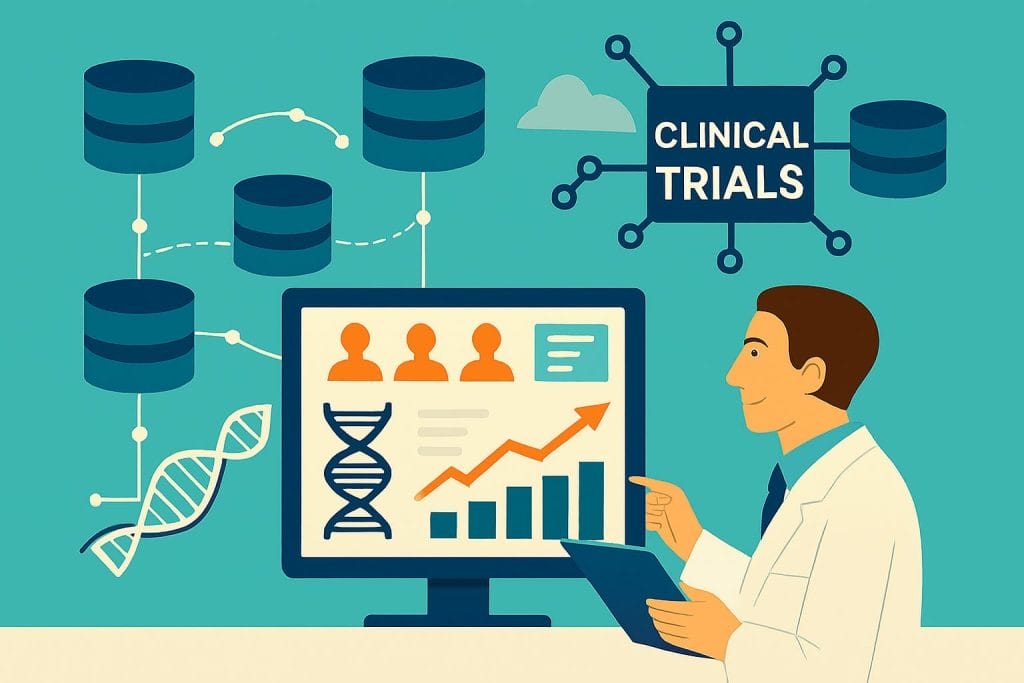
Why Clinical Trial Data Is Harder to Manage Than Ever
Modern trials produce massive and complex data streams:
-
Patient recruitment and electronic health records.
-
Wearable and sensor data for continuous monitoring.
-
Genomic and imaging data requiring advanced analytics.
-
Safety and regulatory reports that must be submitted on time.
Traditional systems built for EHRs or lab management simply can’t handle the velocity and variety of today’s trial workloads.
What Happens When Databases Can’t Keep Up
When trial databases slow down or fail, the impact cascades:
-
Missed deadlines for interim analyses → delayed FDA/EMA submissions.
-
Rising infrastructure costs → wasted budgets for sponsors and CROs.
-
Compliance risks → incomplete or late safety reporting, jeopardizing approval.
In an industry where time-to-market defines competitive advantage, database latency isn’t just inconvenient — it’s a multimillion-dollar risk.
Why Legacy Monitoring Falls Short
Many organizations still rely on legacy monitoring tools. The problem? They were designed for stable, predictable systems — not streaming data, IoT wearables, and AI-powered analytics. These tools often:
-
Fail to identify the root causes of performance degradation.
-
Push teams to overprovision infrastructure instead of optimizing it.
-
Leave blind spots in hybrid and cloud environments.
The result: higher costs, slower trials, and unnecessary regulatory risk.
How Enteros UpBeat Helps
Enteros UpBeat provides AI-driven performance management tailored for data-heavy environments like clinical trials. It helps:
-
Detect and resolve root causes of slowdowns across SQL, NoSQL, and cloud-native databases.
-
Ensure real-time flow of trial, wearable, and lab data.
-
Reduce infrastructure costs by avoiding overprovisioning.
-
Safeguard compliance with timely, auditable data.
By connecting technical performance with trial outcomes, Enteros enables sponsors, CROs, and biotech firms to accelerate approvals while keeping costs under control.
The Bigger Picture: Data, Health, and Trust
Patients, regulators, and sponsors depend on fast, reliable, and trustworthy data. When systems fail, not only are costs higher, but patient safety and public trust are at risk.
High-performance databases are no longer just infrastructure — they are the foundation of faster, safer, and more cost-effective medical innovation.
From patient recruitment to regulatory submission, clinical trials depend on the speed and reliability of databases. The difference between success and costly delay often comes down to how data systems perform under pressure.
Enteros UpBeat equips healthcare innovators with the tools to:
-
Shorten trial timelines.
-
Reduce costs.
-
Mitigate compliance risks.
-
Accelerate time-to-market for life-saving therapies.
FAQ: Databases in Clinical Trials
Q1: Why are databases critical in clinical research?
👉 Trials generate huge, complex, real-time datasets that must be processed without delay to support patient safety and regulatory reporting.
Q2: What happens if trial systems experience latency or downtime?
👉 It can delay adverse event detection, slow regulator reporting, and push back trial milestones — leading to higher costs and missed opportunities.
Q3: Can traditional monitoring tools handle clinical trial workloads?
👉 No — legacy tools were not built for IoT wearables, genomic data, or AI-driven analytics. They create blind spots and drive unnecessary spending.
Q4: How does database performance affect compliance?
👉 Regulators demand timely, auditable data. A sluggish database risks incomplete submissions, penalties, or even trial rejection.
Q5: How does Enteros UpBeat help?
👉 By using AI to detect root causes, optimize costs, and ensure smooth real-time data processing, directly linking IT performance to trial success.
The views expressed on this blog are those of the author and do not necessarily reflect the opinions of Enteros Inc. This blog may contain links to the content of third-party sites. By providing such links, Enteros Inc. does not adopt, guarantee, approve, or endorse the information, views, or products available on such sites.
Are you interested in writing for Enteros’ Blog? Please send us a pitch!
RELATED POSTS
How AIOps and FinOps Optimize Cloud Database Performance for Banking and BFSI
- 31 August 2026
- Database Performance Management
Introduction The banking and financial services industry is undergoing a significant transformation as institutions move critical workloads to cloud and hybrid-cloud environments. Digital banking applications, payment platforms, mobile banking, lending systems, insurance applications, fraud detection platforms, wealth management solutions, and financial analytics increasingly depend on scalable cloud infrastructure and high-performing databases. However, cloud adoption introduces … Continue reading “How AIOps and FinOps Optimize Cloud Database Performance for Banking and BFSI”
How to Optimize Media and Entertainment Database Performance with Enteros Database Software, AI-Powered Analytics, and Database Observability
- 30 August 2026
- Database Performance Management
Introduction The media and entertainment industry has become a digital-first business. Streaming services, digital publishing, online gaming content, advertising platforms, social experiences, content management systems, subscription platforms, and personalized recommendations all depend on databases. Modern media companies process enormous volumes of customer, content, advertising, transaction, and behavioral information. Read more”Indian Country” highlights Enteros and its … Continue reading “How to Optimize Media and Entertainment Database Performance with Enteros Database Software, AI-Powered Analytics, and Database Observability”
How to Optimize Manufacturing Database Performance with Enteros Database Software, AIOps, and Predictive Analytics
Introduction Manufacturing is becoming increasingly dependent on digital infrastructure. Modern factories use enterprise resource planning (ERP), manufacturing execution systems (MES), supply-chain platforms, warehouse management systems, industrial IoT, quality management applications, predictive maintenance, and advanced analytics to manage production. Behind these systems are databases processing enormous amounts of operational information. Production schedules, inventory levels, machine data, … Continue reading “How to Optimize Manufacturing Database Performance with Enteros Database Software, AIOps, and Predictive Analytics”
The Future of Industry-Specific Cloud Optimization with AIOps, FinOps, and AI-Powered Database Management
- 28 August 2026
- Database Performance Management
Introduction Cloud computing has become a foundational component of digital transformation across industries. Banking organizations use cloud platforms to support digital payments and online banking. Healthcare providers rely on cloud infrastructure for digital health applications and patient services. Educational institutions operate learning management systems and virtual classrooms in the cloud. Retailers, manufacturers, insurers, logistics providers, … Continue reading “The Future of Industry-Specific Cloud Optimization with AIOps, FinOps, and AI-Powered Database Management”