Introduction
In mission-critical systems, database performance isn’t just a technical metric — it can directly impact business operations, safety, and revenue. From aerospace and defense to healthcare and financial services, any delay or bottleneck in database operations can lead to costly downtime or compromised outcomes. This is where database stress testing becomes essential.
This article explores database stress testing best practices for mission-critical systems, ensuring high performance, reliability, and resilience.
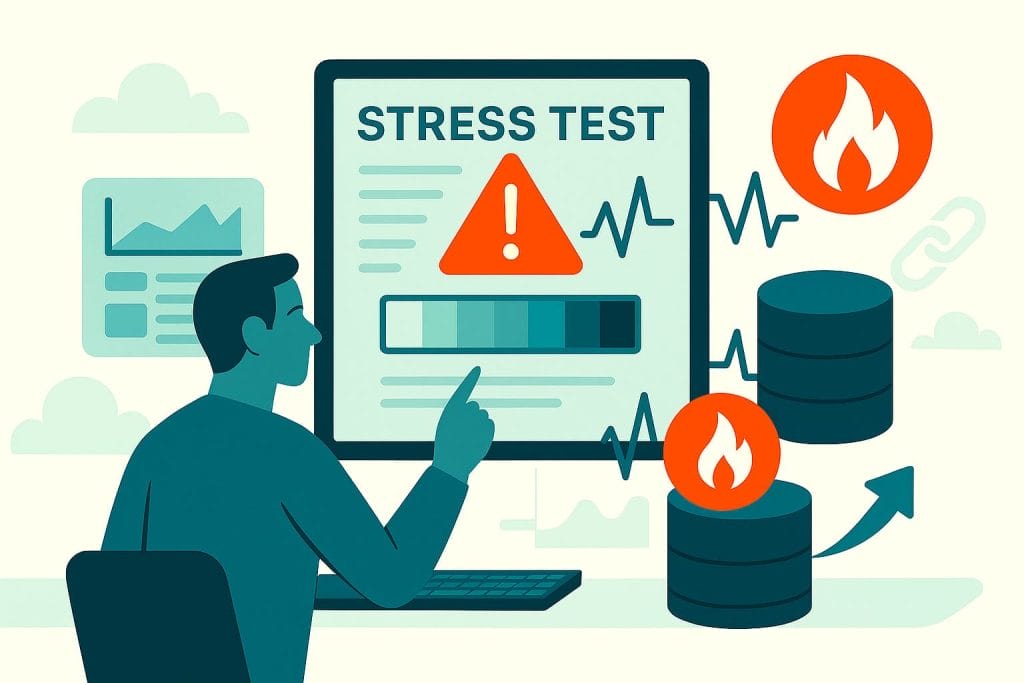
What is Database Stress Testing?
Database stress testing is a process of intentionally pushing your database to its limits to identify weaknesses, bottlenecks, and points of failure before they occur in a production environment. Unlike standard performance testing, stress testing focuses on extreme scenarios such as:
-
High transaction volumes
-
Simultaneous queries from multiple applications
-
Unexpected spikes in user activity
-
Infrastructure failures or network latency
The goal is to ensure that mission-critical systems remain reliable even under peak load or unexpected conditions.
Why Stress Testing Matters for Mission-Critical Systems
-
Prevent downtime: Even a few seconds of delay in systems like air traffic control, hospital dashboards, or financial trading platforms can have serious consequences.
-
Improve performance: Identify slow queries, locking issues, and inefficient indexing before they impact users.
-
Optimize costs: Stress testing can reveal over-provisioned resources or underutilized capacity, helping teams optimize cloud and on-premises infrastructure.
-
Enhance resilience: By simulating failures, teams can validate recovery strategies and disaster recovery plans.
Best Practices for Database Stress Testing
1. Define Clear Objectives
Before testing, define what you aim to achieve:
-
Maximum supported users/transactions
-
Peak query response times
-
System behavior under resource constraints
Clear objectives guide test design and make results actionable.
2. Use Realistic Test Data
Synthetic data is easy to generate, but real-world datasets help uncover hidden performance issues. Include:
-
Typical transaction patterns
-
Complex joins and aggregations
-
Historical data spikes
3. Automate and Schedule Regular Tests
Stress testing shouldn’t be a one-time activity. Automate scripts using tools such as JMeter, LoadRunner, or custom scripts. Schedule tests regularly to account for evolving workloads.
4. Monitor Key Metrics
Focus on metrics that indicate stress and potential failures:
-
Query response times
-
CPU, memory, and I/O usage
-
Locking and deadlocks
-
Error rates and failed transactions
Real-time monitoring allows quick identification and mitigation of bottlenecks.
5. Simulate Failures and Recovery
Mission-critical systems must recover gracefully. Include scenarios such as:
-
Database server crashes
-
Network latency spikes
-
Storage failures
-
Connection pool exhaustion
This ensures that failover mechanisms and backup strategies are effective.
6. Document and Act on Findings
A stress test is only valuable if its findings lead to improvements. Document:
-
Identified bottlenecks
-
Root causes
-
Recommended fixes
-
Performance benchmarks for future reference
7. Test Across Environments
Don’t limit testing to production-like environments. Test across:
-
Development and staging systems
-
Cloud vs. on-premises setups
-
Multi-region deployments
This approach ensures consistency and reliability across all operational contexts.
Conclusion
Database stress testing is a critical practice for mission-critical systems. By simulating extreme conditions and identifying potential points of failure, organizations can prevent downtime, optimize performance, and enhance system resilience. Implementing a regular, automated, and well-monitored stress testing strategy ensures that your databases can handle peak loads and unexpected events — keeping your mission-critical operations running smoothly.
FAQ
Q1: How often should stress testing be performed?
Stress testing should be automated and scheduled regularly, ideally whenever there are major system updates, database schema changes, or workload increases.
Q2: Can stress testing be done on production databases?
It is not recommended to perform stress testing directly on live production databases. Use staging or cloned environments to avoid impacting live operations.
Q3: Which tools are best for stress testing databases?
Popular tools include JMeter, LoadRunner, Apache Bench, and custom scripts. Choose tools that can simulate realistic loads and capture detailed metrics.
Q4: How do we measure success in stress testing?
Success is measured by system stability under extreme loads, response times within acceptable limits, minimal error rates, and the ability to recover quickly from failures.
Q5: Does stress testing help reduce IT costs?
Yes. By identifying bottlenecks, underutilized resources, and inefficient queries, stress testing enables teams to optimize infrastructure usage and reduce unnecessary spending.
The views expressed on this blog are those of the author and do not necessarily reflect the opinions of Enteros Inc. This blog may contain links to the content of third-party sites. By providing such links, Enteros Inc. does not adopt, guarantee, approve, or endorse the information, views, or products available on such sites.
Are you interested in writing for Enteros’ Blog? Please send us a pitch!
RELATED POSTS
How AIOps and FinOps Optimize Cloud Database Performance for Banking and BFSI
- 31 August 2026
- Database Performance Management
Introduction The banking and financial services industry is undergoing a significant transformation as institutions move critical workloads to cloud and hybrid-cloud environments. Digital banking applications, payment platforms, mobile banking, lending systems, insurance applications, fraud detection platforms, wealth management solutions, and financial analytics increasingly depend on scalable cloud infrastructure and high-performing databases. However, cloud adoption introduces … Continue reading “How AIOps and FinOps Optimize Cloud Database Performance for Banking and BFSI”
How to Optimize Media and Entertainment Database Performance with Enteros Database Software, AI-Powered Analytics, and Database Observability
- 30 August 2026
- Database Performance Management
Introduction The media and entertainment industry has become a digital-first business. Streaming services, digital publishing, online gaming content, advertising platforms, social experiences, content management systems, subscription platforms, and personalized recommendations all depend on databases. Modern media companies process enormous volumes of customer, content, advertising, transaction, and behavioral information. Read more”Indian Country” highlights Enteros and its … Continue reading “How to Optimize Media and Entertainment Database Performance with Enteros Database Software, AI-Powered Analytics, and Database Observability”
How to Optimize Manufacturing Database Performance with Enteros Database Software, AIOps, and Predictive Analytics
Introduction Manufacturing is becoming increasingly dependent on digital infrastructure. Modern factories use enterprise resource planning (ERP), manufacturing execution systems (MES), supply-chain platforms, warehouse management systems, industrial IoT, quality management applications, predictive maintenance, and advanced analytics to manage production. Behind these systems are databases processing enormous amounts of operational information. Production schedules, inventory levels, machine data, … Continue reading “How to Optimize Manufacturing Database Performance with Enteros Database Software, AIOps, and Predictive Analytics”
The Future of Industry-Specific Cloud Optimization with AIOps, FinOps, and AI-Powered Database Management
- 28 August 2026
- Database Performance Management
Introduction Cloud computing has become a foundational component of digital transformation across industries. Banking organizations use cloud platforms to support digital payments and online banking. Healthcare providers rely on cloud infrastructure for digital health applications and patient services. Educational institutions operate learning management systems and virtual classrooms in the cloud. Retailers, manufacturers, insurers, logistics providers, … Continue reading “The Future of Industry-Specific Cloud Optimization with AIOps, FinOps, and AI-Powered Database Management”