Introduction
Healthcare is undergoing rapid digital transformation: electronic health records (EHRs), telemedicine platforms, IoT-enabled medical devices, and AI-driven diagnostics. All these systems depend on one invisible backbone — databases.
When databases slow down, the impact isn’t just operational — it can directly affect patient care, safety, and trust.
In this article, we explore why database performance is critical for healthcare IT, what risks emerge from latency, and how the industry can overcome these challenges.
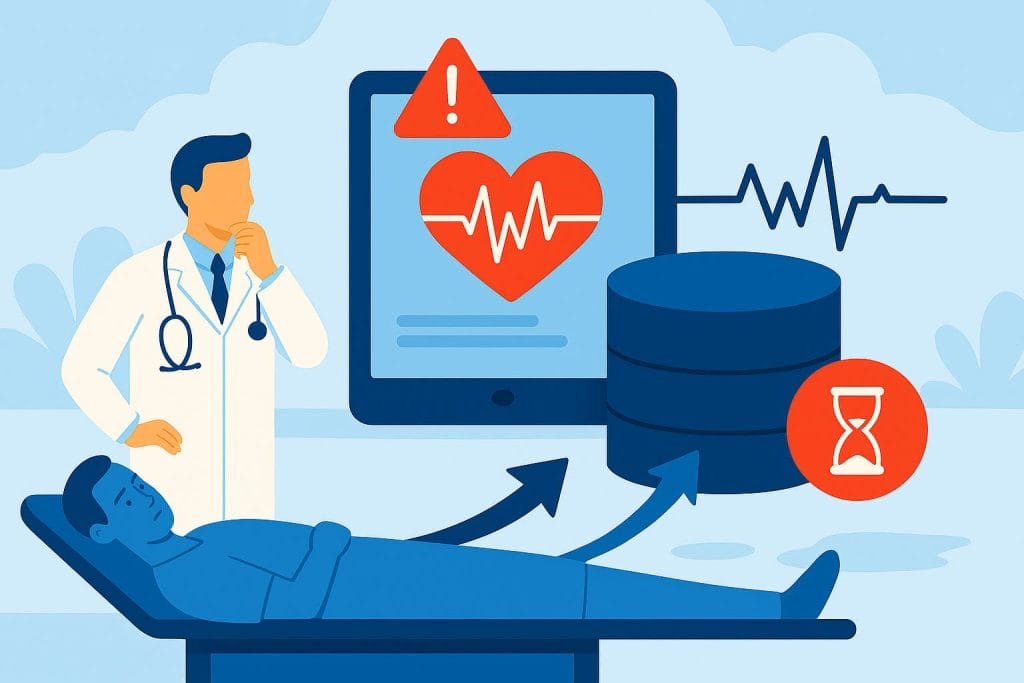
Why Database Performance Matters in Healthcare
Unlike many industries, healthcare is time-sensitive and life-critical. Slow systems can lead to:
-
Delayed access to EHRs → Doctors making decisions without full patient history.
-
Telemedicine lags → Interrupted consultations and missed diagnoses.
-
Medical device failures → IoT devices feeding late or incomplete data.
-
Prescription errors → Pharmacy systems misaligned due to database lag.
Here, milliseconds aren’t about convenience — they’re about lives.
The Hidden Risks of Database Latency
Database performance issues in healthcare create a ripple effect:
-
Patient Safety Risks — Wrong or late data can delay treatment.
-
Operational Disruptions — Scheduling, billing, and insurance claims are delayed.
-
Increased Costs — Hospitals overprovision IT infrastructure to mask bottlenecks.
-
Loss of Trust — Patients expect digital systems to be reliable, secure, and fast.
Why Healthcare IT Struggles
Healthcare IT often faces unique challenges:
-
Legacy systems not built for real-time workloads.
-
Hybrid environments combining on-premises and cloud databases.
-
Lack of proactive monitoring, leading to reactive firefighting.
Building a Resilient Data Layer for Healthcare
To ensure systems run smoothly:
-
Implement real-time monitoring for query latency and performance bottlenecks.
-
Use AI-driven anomaly detection to predict failures before they occur.
-
Adopt scalable architectures that can handle spikes in patient data (e.g., during pandemics).
-
Train IT teams to focus on root cause analysis, not just infrastructure scaling.
Conclusion
Digital healthcare cannot succeed without fast, reliable databases. Performance issues translate into risks for patients, costs for providers, and reputational damage for the entire system.
FAQ
Q1: Why is database performance critical in healthcare?
Because delays directly affect patient care, treatment accuracy, and safety.
Q2: What are the main risks of slow databases in hospitals?
Missed diagnoses, prescription errors, telemedicine failures, and increased costs.
Q3: Can legacy systems handle modern healthcare workloads?
Rarely — they require upgrades or optimization for real-time use.
Q4: How can healthcare providers avoid latency issues?
Through monitoring, anomaly detection, and scalable, resilient architectures.
The views expressed on this blog are those of the author and do not necessarily reflect the opinions of Enteros Inc. This blog may contain links to the content of third-party sites. By providing such links, Enteros Inc. does not adopt, guarantee, approve, or endorse the information, views, or products available on such sites.
Are you interested in writing for Enteros’ Blog? Please send us a pitch!
RELATED POSTS
How AIOps and FinOps Optimize Cloud Database Performance for Banking and BFSI
- 31 August 2026
- Database Performance Management
Introduction The banking and financial services industry is undergoing a significant transformation as institutions move critical workloads to cloud and hybrid-cloud environments. Digital banking applications, payment platforms, mobile banking, lending systems, insurance applications, fraud detection platforms, wealth management solutions, and financial analytics increasingly depend on scalable cloud infrastructure and high-performing databases. However, cloud adoption introduces … Continue reading “How AIOps and FinOps Optimize Cloud Database Performance for Banking and BFSI”
How to Optimize Media and Entertainment Database Performance with Enteros Database Software, AI-Powered Analytics, and Database Observability
- 30 August 2026
- Database Performance Management
Introduction The media and entertainment industry has become a digital-first business. Streaming services, digital publishing, online gaming content, advertising platforms, social experiences, content management systems, subscription platforms, and personalized recommendations all depend on databases. Modern media companies process enormous volumes of customer, content, advertising, transaction, and behavioral information. Read more”Indian Country” highlights Enteros and its … Continue reading “How to Optimize Media and Entertainment Database Performance with Enteros Database Software, AI-Powered Analytics, and Database Observability”
How to Optimize Manufacturing Database Performance with Enteros Database Software, AIOps, and Predictive Analytics
Introduction Manufacturing is becoming increasingly dependent on digital infrastructure. Modern factories use enterprise resource planning (ERP), manufacturing execution systems (MES), supply-chain platforms, warehouse management systems, industrial IoT, quality management applications, predictive maintenance, and advanced analytics to manage production. Behind these systems are databases processing enormous amounts of operational information. Production schedules, inventory levels, machine data, … Continue reading “How to Optimize Manufacturing Database Performance with Enteros Database Software, AIOps, and Predictive Analytics”
The Future of Industry-Specific Cloud Optimization with AIOps, FinOps, and AI-Powered Database Management
- 28 August 2026
- Database Performance Management
Introduction Cloud computing has become a foundational component of digital transformation across industries. Banking organizations use cloud platforms to support digital payments and online banking. Healthcare providers rely on cloud infrastructure for digital health applications and patient services. Educational institutions operate learning management systems and virtual classrooms in the cloud. Retailers, manufacturers, insurers, logistics providers, … Continue reading “The Future of Industry-Specific Cloud Optimization with AIOps, FinOps, and AI-Powered Database Management”