Introduction
Automotive manufacturers operate in a world where every second counts. Production lines run 24/7, supply chains are global, and digital systems coordinate everything from assembly robots to logistics. A single instance of downtime can cost millions in lost output and disrupt delivery schedules. One of the silent culprits? Poorly monitored databases.
In this article, we explore how proactive database monitoring can minimize downtime, improve efficiency, and secure competitive advantage in automotive manufacturing.
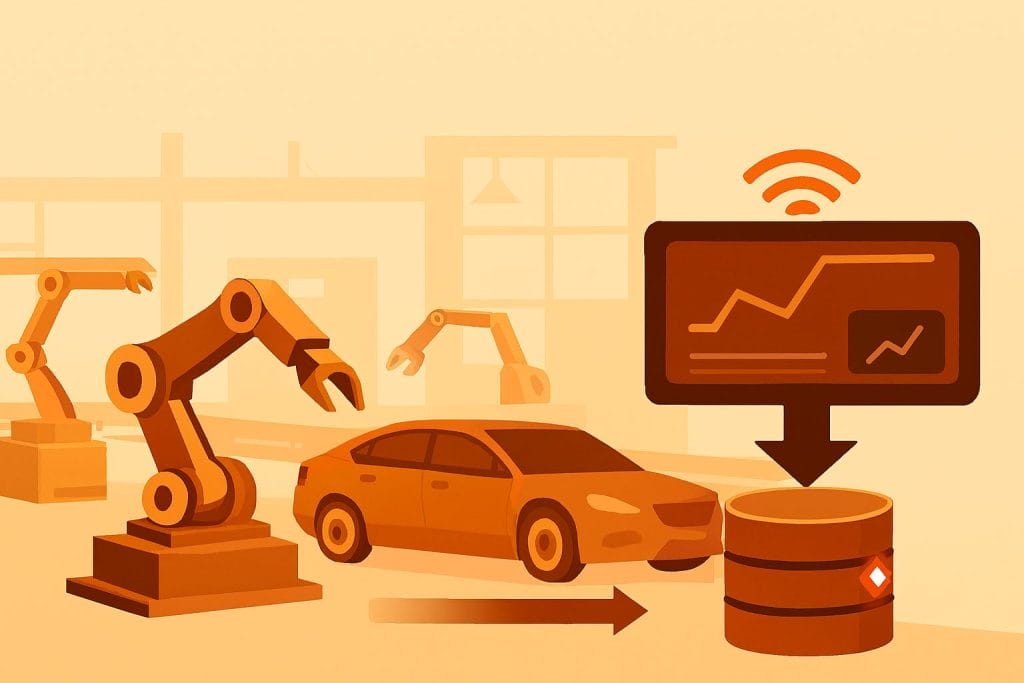
.
The Cost of Downtime in Automotive Production
When a production line halts, the consequences ripple across the ecosystem:
-
Financial loss → Some estimates put downtime costs at $20,000+ per minute.
-
Supply chain delays → Late shipments disrupt dealer networks.
-
Brand damage → Missed deadlines harm customer trust.
Why Databases Are Central to Automotive Manufacturing
Modern plants depend on high-performance databases for:
-
Robotics control — Automated assembly requires real-time coordination.
-
Supply chain management — Tracking inventory, parts, and logistics.
-
Quality control — Sensor-driven checks at every stage of production.
-
Predictive maintenance — Anticipating machine failure before it happens.
If the database slows, all these critical processes are at risk.
How Database Monitoring Prevents Failures
Proactive monitoring ensures problems are caught before they escalate. Key practices include:
-
Real-time performance tracking — Monitoring query latency and throughput.
-
Anomaly detection — Using AI/ML models to flag unusual activity.
-
Capacity planning — Predicting when systems will hit thresholds.
-
Automated alerts and remediation — Fixing issues before they affect operations.
Case Example: Automotive Downtime Avoided
A global car manufacturer implemented database monitoring and identified a recurring query bottleneck that slowed assembly line robotics. By resolving it proactively, they prevented a potential 6-hour downtime, saving millions.
Best Practices for Manufacturers
-
Integrate monitoring into enterprise dashboards.
-
Conduct quarterly DB performance audits.
-
Train IT teams to act on real-time alerts.
-
Partner with database performance specialists for optimization.
Conclusion
Database monitoring is not a “nice-to-have” but a mission-critical tool for automotive manufacturing. The ability to predict and prevent downtime ensures continuity, reduces costs, and protects brand reputation.
FAQ
Q1: What causes database downtime in automotive manufacturing?
Poor query optimization, lack of monitoring, overload, or hardware/software mismatches.
Q2: How does monitoring reduce downtime?
It detects anomalies early, allowing IT teams to fix issues before they escalate.
Q3: Can monitoring improve supply chain resilience?
Yes, by ensuring real-time tracking of logistics and parts, reducing disruptions.
Q4: Is monitoring enough, or do manufacturers need optimization too?
Monitoring is the first step; optimization ensures sustained performance improvements.
The views expressed on this blog are those of the author and do not necessarily reflect the opinions of Enteros Inc. This blog may contain links to the content of third-party sites. By providing such links, Enteros Inc. does not adopt, guarantee, approve, or endorse the information, views, or products available on such sites.
Are you interested in writing for Enteros’ Blog? Please send us a pitch!
RELATED POSTS
How AIOps and FinOps Optimize Cloud Database Performance for Banking and BFSI
- 31 August 2026
- Database Performance Management
Introduction The banking and financial services industry is undergoing a significant transformation as institutions move critical workloads to cloud and hybrid-cloud environments. Digital banking applications, payment platforms, mobile banking, lending systems, insurance applications, fraud detection platforms, wealth management solutions, and financial analytics increasingly depend on scalable cloud infrastructure and high-performing databases. However, cloud adoption introduces … Continue reading “How AIOps and FinOps Optimize Cloud Database Performance for Banking and BFSI”
How to Optimize Media and Entertainment Database Performance with Enteros Database Software, AI-Powered Analytics, and Database Observability
- 30 August 2026
- Database Performance Management
Introduction The media and entertainment industry has become a digital-first business. Streaming services, digital publishing, online gaming content, advertising platforms, social experiences, content management systems, subscription platforms, and personalized recommendations all depend on databases. Modern media companies process enormous volumes of customer, content, advertising, transaction, and behavioral information. Read more”Indian Country” highlights Enteros and its … Continue reading “How to Optimize Media and Entertainment Database Performance with Enteros Database Software, AI-Powered Analytics, and Database Observability”
How to Optimize Manufacturing Database Performance with Enteros Database Software, AIOps, and Predictive Analytics
Introduction Manufacturing is becoming increasingly dependent on digital infrastructure. Modern factories use enterprise resource planning (ERP), manufacturing execution systems (MES), supply-chain platforms, warehouse management systems, industrial IoT, quality management applications, predictive maintenance, and advanced analytics to manage production. Behind these systems are databases processing enormous amounts of operational information. Production schedules, inventory levels, machine data, … Continue reading “How to Optimize Manufacturing Database Performance with Enteros Database Software, AIOps, and Predictive Analytics”
The Future of Industry-Specific Cloud Optimization with AIOps, FinOps, and AI-Powered Database Management
- 28 August 2026
- Database Performance Management
Introduction Cloud computing has become a foundational component of digital transformation across industries. Banking organizations use cloud platforms to support digital payments and online banking. Healthcare providers rely on cloud infrastructure for digital health applications and patient services. Educational institutions operate learning management systems and virtual classrooms in the cloud. Retailers, manufacturers, insurers, logistics providers, … Continue reading “The Future of Industry-Specific Cloud Optimization with AIOps, FinOps, and AI-Powered Database Management”