Introduction
The healthcare industry is generating and managing more data than ever before — from electronic health records (EHRs) and telemedicine platforms to genomics research and AI-driven diagnostics. This massive growth of structured and unstructured data puts unprecedented pressure on IT infrastructure, databases, and compliance processes.
At the same time, healthcare providers face rising cloud costs and increasing regulatory complexity, as frameworks like HIPAA and GDPR demand secure, compliant data management. Without intelligent solutions, performance bottlenecks, downtime, and budget overruns can quickly escalate into operational and financial risks.
This blog explores how Enteros’ SQL AI–powered AIOps platform helps healthcare organizations optimize database performance, manage compliance, and control cloud costs — enabling them to innovate while ensuring resilience and patient safety.
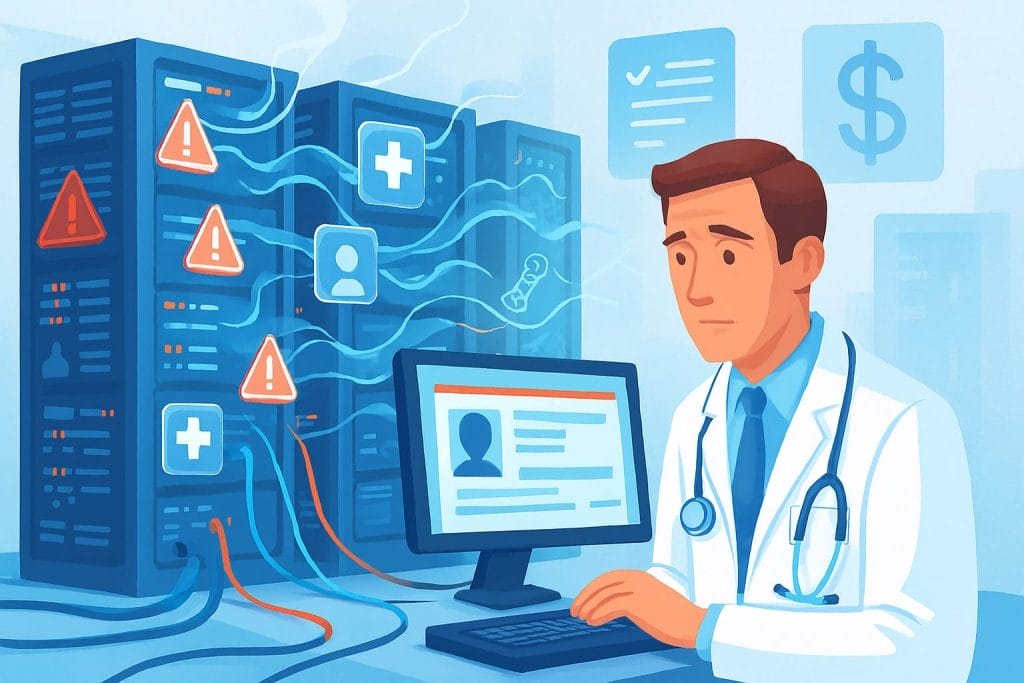 The Database Challenge in Modern HealthcareHealthcare systems rely on databases to power:● EHRs → Physicians need instant patient data access during critical decisions.
● Telemedicine platforms → High availability is essential during spikes in virtual consultations.
● Genomics research → Massive datasets must be processed securely and at speed.
● Billing & RevOps systems → Claims must be processed accurately and in compliance.
But IT leaders face mounting obstacles:
● Explosive data growth from AI, IoT, and connected devices.
● Rising and unpredictable cloud infrastructure spend.
● Regulatory pressure to meet HIPAA/GDPR/HITRUST requirements.
● Downtime risks that can delay treatment and disrupt operations.
How Enteros Helps Healthcare IT
SQL AI Optimization
-
Detects inefficient queries, indexing gaps, and execution bottlenecks.
-
Speeds up EHR, billing, and research pipelines.
AI-Powered Root Cause Analysis
-
Goes beyond alerts to explain why failures occur.
-
Links outages or slowdowns directly to the root issue — query inefficiency, misconfiguration, or workload surge.
Cloud Cost & FinOps Control
-
Allocates database costs by project, department, or research initiative.
-
Identifies underutilized cloud resources and rightsizes workloads.
-
Improves budget predictability while keeping compliance intact.
Compliance & Security
-
Generates audit-ready logs for HIPAA and GDPR.Uses anomaly detection to flag suspicious activity before it becomes a breach.
-
Scalability for Growth
Dynamically scales to handle telemedicine surges, genomic workloads, and AI-driven diagnostics.
Real-World Use Cases
-
Telemedicine Provider → Sustained 99.99% uptime during peak consultation surges.
-
Hospital Network → Reduced EHR query latency by 40%, accelerating physician access to records.
-
Genomics Lab → Lowered compute/storage spend by 30% while speeding up research pipelines.
-
Healthcare Insurer → Optimized claims databases to process transactions 25% faster.
Benefits of Enteros for Healthcare
-
Faster, more reliable access to patient and research data.
-
Cloud spend under control with transparent FinOps attribution.
-
Stronger compliance with HIPAA, GDPR, and HITRUST.
-
Reduced downtime risk through root-cause diagnosis and automation.
-
Future-ready scalability for AI and research-driven workloads.
Conclusion
Healthcare providers must manage explosive data growth, rising cloud costs, and strict regulatory requirements — without sacrificing patient care or innovation. Enteros enables IT leaders to optimize database performance, cut inefficiencies, and maintain compliance with confidence.
By turning hidden database inefficiencies into measurable improvements, Enteros gives healthcare organizations the resilience, scalability, and financial control they need to thrive in the AI era.
Frequently Asked Questions
Q1: Can Enteros improve the performance of EHR systems?
Yes. Enteros identifies inefficient SQL queries and indexing issues, reducing latency and improving physician access to patient data.Q2: How does Enteros support compliance in healthcare IT?
It provides audit-ready logs, anomaly detection, and automated reporting to align with HIPAA, GDPR, and HITRUST.Q3: Will Enteros help reduce cloud costs in healthcare?
Absolutely. Through FinOps integration, Enteros helps allocate costs, optimize workloads, and eliminate resource waste.Q4: Can Enteros scale for genomics and AI-driven workloads?
Yes. Enteros dynamically scales resources to handle massive research datasets and high-performance computing needs.Q5: How does Enteros differ from traditional monitoring tools?
Unlike tools that only send alerts, Enteros uses SQL AI and AIOps to diagnose root causes, tune performance, and automate remediation.
The views expressed on this blog are those of the author and do not necessarily reflect the opinions of Enteros Inc. This blog may contain links to the content of third-party sites. By providing such links, Enteros Inc. does not adopt, guarantee, approve, or endorse the information, views, or products available on such sites.
Are you interested in writing for Enteros’ Blog? Please send us a pitch!
RELATED POSTS
How AIOps and FinOps Optimize Cloud Database Performance for Banking and BFSI
- 31 August 2026
- Database Performance Management
Introduction The banking and financial services industry is undergoing a significant transformation as institutions move critical workloads to cloud and hybrid-cloud environments. Digital banking applications, payment platforms, mobile banking, lending systems, insurance applications, fraud detection platforms, wealth management solutions, and financial analytics increasingly depend on scalable cloud infrastructure and high-performing databases. However, cloud adoption introduces … Continue reading “How AIOps and FinOps Optimize Cloud Database Performance for Banking and BFSI”
How to Optimize Media and Entertainment Database Performance with Enteros Database Software, AI-Powered Analytics, and Database Observability
- 30 August 2026
- Database Performance Management
Introduction The media and entertainment industry has become a digital-first business. Streaming services, digital publishing, online gaming content, advertising platforms, social experiences, content management systems, subscription platforms, and personalized recommendations all depend on databases. Modern media companies process enormous volumes of customer, content, advertising, transaction, and behavioral information. Read more”Indian Country” highlights Enteros and its … Continue reading “How to Optimize Media and Entertainment Database Performance with Enteros Database Software, AI-Powered Analytics, and Database Observability”
How to Optimize Manufacturing Database Performance with Enteros Database Software, AIOps, and Predictive Analytics
Introduction Manufacturing is becoming increasingly dependent on digital infrastructure. Modern factories use enterprise resource planning (ERP), manufacturing execution systems (MES), supply-chain platforms, warehouse management systems, industrial IoT, quality management applications, predictive maintenance, and advanced analytics to manage production. Behind these systems are databases processing enormous amounts of operational information. Production schedules, inventory levels, machine data, … Continue reading “How to Optimize Manufacturing Database Performance with Enteros Database Software, AIOps, and Predictive Analytics”
The Future of Industry-Specific Cloud Optimization with AIOps, FinOps, and AI-Powered Database Management
- 28 August 2026
- Database Performance Management
Introduction Cloud computing has become a foundational component of digital transformation across industries. Banking organizations use cloud platforms to support digital payments and online banking. Healthcare providers rely on cloud infrastructure for digital health applications and patient services. Educational institutions operate learning management systems and virtual classrooms in the cloud. Retailers, manufacturers, insurers, logistics providers, … Continue reading “The Future of Industry-Specific Cloud Optimization with AIOps, FinOps, and AI-Powered Database Management”