Introduction
Modern agriculture is undergoing a digital revolution. Smart farming, powered by IoT devices and advanced analytics, has turned fields into connected ecosystems. From drones that scan crop health to sensors measuring soil and water conditions, data is now as critical to farming as rainfall and sunlight.
Yet this digital promise has a bottleneck: if databases cannot keep up, IoT insights lose their value.
This article explores why agriculture now depends on high-performance databases, the risks of ignoring database performance, and how solutions like Enteros UpBeat help agritech companies scale efficiently.
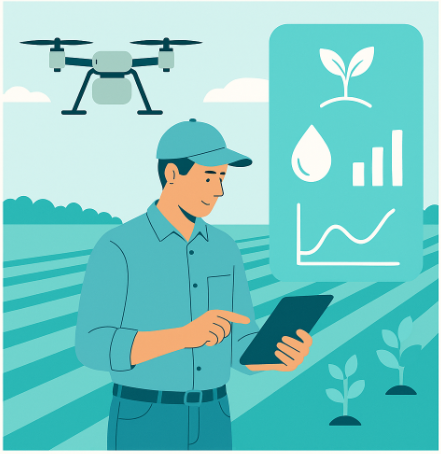
The Data Challenge in Agriculture
Smart farming generates huge and unpredictable workloads:
-
Real-time soil and weather data.
-
GPS-enabled tractors streaming operations.
-
Drone imaging for crop health.
-
IoT sensors monitoring livestock.
Each dataset is valuable — but only if processed instantly. Database bottlenecks can delay irrigation, miss early disease detection, and waste resources.
Why High-Performance Databases Are Essential
Agriculture is highly time-sensitive. Even milliseconds matter:
-
Late irrigation = crop stress.
-
Delayed fertilizer schedules = higher costs.
-
Missed livestock alerts = lower efficiency.
For agritech platforms, this translates directly into lost revenue, wasted inputs, and reduced ROI.
Scaling for Global Food Demands
By 2050, agriculture must feed nearly 10 billion people. This requires not only innovation in farming but also data systems that can scale reliably.
This article explores how databases in agriculture must:
-
Handle seasonal workload spikes.
-
Support real-time decision-making.
-
Integrate with cloud and edge computing.
-
Deliver insights without overspending on infrastructure.
Without robust database performance management, agritech companies risk higher costs and operational disruptions.
How Enteros UpBeat Supports Agritech
Enteros UpBeat provides AI-driven database performance management that helps agricultural enterprises:
-
Detect and fix root causes of slowdowns.
-
Scale efficiently without costly overprovisioning.
-
Ensure real-time insights for farming operations.
-
Connect performance issues directly to financial outcomes.
This gives CIOs and CTOs confidence that their IoT platforms run smoothly, even at peak demand.
FAQ: Smart Farming and Databases
Q1: What’s the biggest database challenge in agritech?
Unpredictable, high-volume IoT data streams that legacy systems can’t process in real time.
Q2: How does poor database performance affect ROI?
It increases input waste, delays yield improvements, and forces unnecessary infrastructure spending.
Q3: How can agritech companies control cloud costs?
With AI-powered tools like Enteros UpBeat that map database inefficiencies directly to spend and suggest scaling strategies.
Q4: Is this relevant only for large enterprises?
No — even mid-size agritech firms face database bottlenecks once IoT devices scale beyond pilots.
Q5: How fast is the impact visible?
Many clients see measurable cost reductions and performance gains within weeks of deployment.
The views expressed on this blog are those of the author and do not necessarily reflect the opinions of Enteros Inc. This blog may contain links to the content of third-party sites. By providing such links, Enteros Inc. does not adopt, guarantee, approve, or endorse the information, views, or products available on such sites.
Are you interested in writing for Enteros’ Blog? Please send us a pitch!
RELATED POSTS
How AIOps and FinOps Optimize Cloud Database Performance for Banking and BFSI
- 31 August 2026
- Database Performance Management
Introduction The banking and financial services industry is undergoing a significant transformation as institutions move critical workloads to cloud and hybrid-cloud environments. Digital banking applications, payment platforms, mobile banking, lending systems, insurance applications, fraud detection platforms, wealth management solutions, and financial analytics increasingly depend on scalable cloud infrastructure and high-performing databases. However, cloud adoption introduces … Continue reading “How AIOps and FinOps Optimize Cloud Database Performance for Banking and BFSI”
How to Optimize Media and Entertainment Database Performance with Enteros Database Software, AI-Powered Analytics, and Database Observability
- 30 August 2026
- Database Performance Management
Introduction The media and entertainment industry has become a digital-first business. Streaming services, digital publishing, online gaming content, advertising platforms, social experiences, content management systems, subscription platforms, and personalized recommendations all depend on databases. Modern media companies process enormous volumes of customer, content, advertising, transaction, and behavioral information. Read more”Indian Country” highlights Enteros and its … Continue reading “How to Optimize Media and Entertainment Database Performance with Enteros Database Software, AI-Powered Analytics, and Database Observability”
How to Optimize Manufacturing Database Performance with Enteros Database Software, AIOps, and Predictive Analytics
Introduction Manufacturing is becoming increasingly dependent on digital infrastructure. Modern factories use enterprise resource planning (ERP), manufacturing execution systems (MES), supply-chain platforms, warehouse management systems, industrial IoT, quality management applications, predictive maintenance, and advanced analytics to manage production. Behind these systems are databases processing enormous amounts of operational information. Production schedules, inventory levels, machine data, … Continue reading “How to Optimize Manufacturing Database Performance with Enteros Database Software, AIOps, and Predictive Analytics”
The Future of Industry-Specific Cloud Optimization with AIOps, FinOps, and AI-Powered Database Management
- 28 August 2026
- Database Performance Management
Introduction Cloud computing has become a foundational component of digital transformation across industries. Banking organizations use cloud platforms to support digital payments and online banking. Healthcare providers rely on cloud infrastructure for digital health applications and patient services. Educational institutions operate learning management systems and virtual classrooms in the cloud. Retailers, manufacturers, insurers, logistics providers, … Continue reading “The Future of Industry-Specific Cloud Optimization with AIOps, FinOps, and AI-Powered Database Management”