Introduction
Smart grids promise efficiency, sustainability, and resilience. But when databases powering them lag, the result isn’t just inconvenience—it’s regional blackouts and massive financial losses.
In this article, we explore why database delays threaten energy infrastructure and how providers can protect against them.
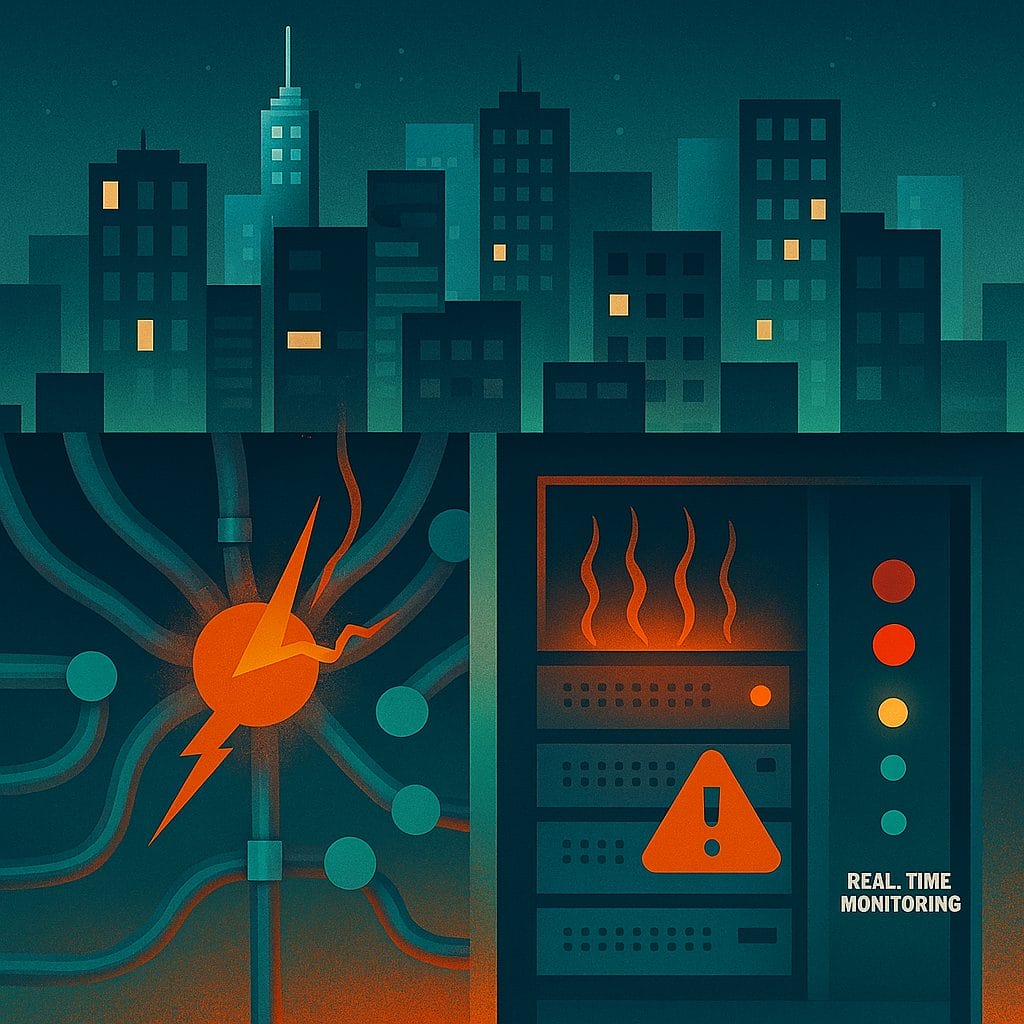
Why Databases Matter in Smart Grids
Smart grids process billions of data points every second:
-
Real-time sensor inputs from substations and meters.
-
Demand forecasts matching consumption with production.
-
Market pricing adjustments.
-
Integration of renewable energy flows.
Every millisecond counts. If the database lags, the grid loses the ability to balance demand and supply.
The Impact of Latency
Delays in database performance can cause:
-
Load imbalance → instability and grid collapse.
-
Slower fault detection → local issues escalate into outages.
-
Renewable inefficiency → wasted solar and wind energy.
-
Blackouts → affecting millions of customers.
Why Legacy Infrastructure Struggles
Most energy providers still rely on database systems not designed for:
-
Extreme concurrency.
-
Global synchronization across nodes.
-
Predictive analytics integrated with operations.
This mismatch leaves systems exposed to risks during peak demand.
Solutions Emerging
-
Real-time monitoring of database queries.
-
Distributed, resilient architectures.
-
AI-driven anomaly detection.
-
Stress testing and simulation of crises.
Conclusion
Smart grids are only as strong as their databases. Without fast, scalable systems, the vision of reliable, sustainable energy risks collapsing in milliseconds.
FAQ
Q: Don’t smart grids already have redundancy?
A: They do, but without real-time DB monitoring, even backup systems suffer from latency and overload.
Q: How big are the losses from these delays?
A: Minutes of downtime can cost millions and cause regional blackouts.
Q: Can cloud scaling fix this?
A: Only partially. Without query optimization and predictive load handling, scaling just shifts the problem.
Q: Who is accountable for DB performance in energy?
A: Responsibility is shared among IT vendors, grid operators, and regulators.
The views expressed on this blog are those of the author and do not necessarily reflect the opinions of Enteros Inc. This blog may contain links to the content of third-party sites. By providing such links, Enteros Inc. does not adopt, guarantee, approve, or endorse the information, views, or products available on such sites.
Are you interested in writing for Enteros’ Blog? Please send us a pitch!
RELATED POSTS
How AIOps and FinOps Optimize Cloud Database Performance for Banking and BFSI
- 31 August 2026
- Database Performance Management
Introduction The banking and financial services industry is undergoing a significant transformation as institutions move critical workloads to cloud and hybrid-cloud environments. Digital banking applications, payment platforms, mobile banking, lending systems, insurance applications, fraud detection platforms, wealth management solutions, and financial analytics increasingly depend on scalable cloud infrastructure and high-performing databases. However, cloud adoption introduces … Continue reading “How AIOps and FinOps Optimize Cloud Database Performance for Banking and BFSI”
How to Optimize Media and Entertainment Database Performance with Enteros Database Software, AI-Powered Analytics, and Database Observability
- 30 August 2026
- Database Performance Management
Introduction The media and entertainment industry has become a digital-first business. Streaming services, digital publishing, online gaming content, advertising platforms, social experiences, content management systems, subscription platforms, and personalized recommendations all depend on databases. Modern media companies process enormous volumes of customer, content, advertising, transaction, and behavioral information. Read more”Indian Country” highlights Enteros and its … Continue reading “How to Optimize Media and Entertainment Database Performance with Enteros Database Software, AI-Powered Analytics, and Database Observability”
How to Optimize Manufacturing Database Performance with Enteros Database Software, AIOps, and Predictive Analytics
Introduction Manufacturing is becoming increasingly dependent on digital infrastructure. Modern factories use enterprise resource planning (ERP), manufacturing execution systems (MES), supply-chain platforms, warehouse management systems, industrial IoT, quality management applications, predictive maintenance, and advanced analytics to manage production. Behind these systems are databases processing enormous amounts of operational information. Production schedules, inventory levels, machine data, … Continue reading “How to Optimize Manufacturing Database Performance with Enteros Database Software, AIOps, and Predictive Analytics”
The Future of Industry-Specific Cloud Optimization with AIOps, FinOps, and AI-Powered Database Management
- 28 August 2026
- Database Performance Management
Introduction Cloud computing has become a foundational component of digital transformation across industries. Banking organizations use cloud platforms to support digital payments and online banking. Healthcare providers rely on cloud infrastructure for digital health applications and patient services. Educational institutions operate learning management systems and virtual classrooms in the cloud. Retailers, manufacturers, insurers, logistics providers, … Continue reading “The Future of Industry-Specific Cloud Optimization with AIOps, FinOps, and AI-Powered Database Management”