Introduction
The technology sector is entering a new era as artificial intelligence (AI) and machine learning (ML) evolve from experimental pilots to mission-critical business systems. From real-time recommendation engines to fraud detection and natural language processing, modern AI thrives on fast, reliable, and scalable database performance.
But with this evolution comes a major challenge. AI-driven workloads behave differently from traditional applications: they are heavier, less predictable, and far more resource-intensive. As datasets expand and queries grow in complexity, even robust infrastructures can struggle. Conventional monitoring tools often fail to provide the deep insights needed to stay ahead, leading to hidden inefficiencies and escalating costs.
This article explores why AI workloads strain databases, what risks arise if these challenges are overlooked, and how Enteros enables technology companies to sustain performance, reduce costs, and scale with confidence.
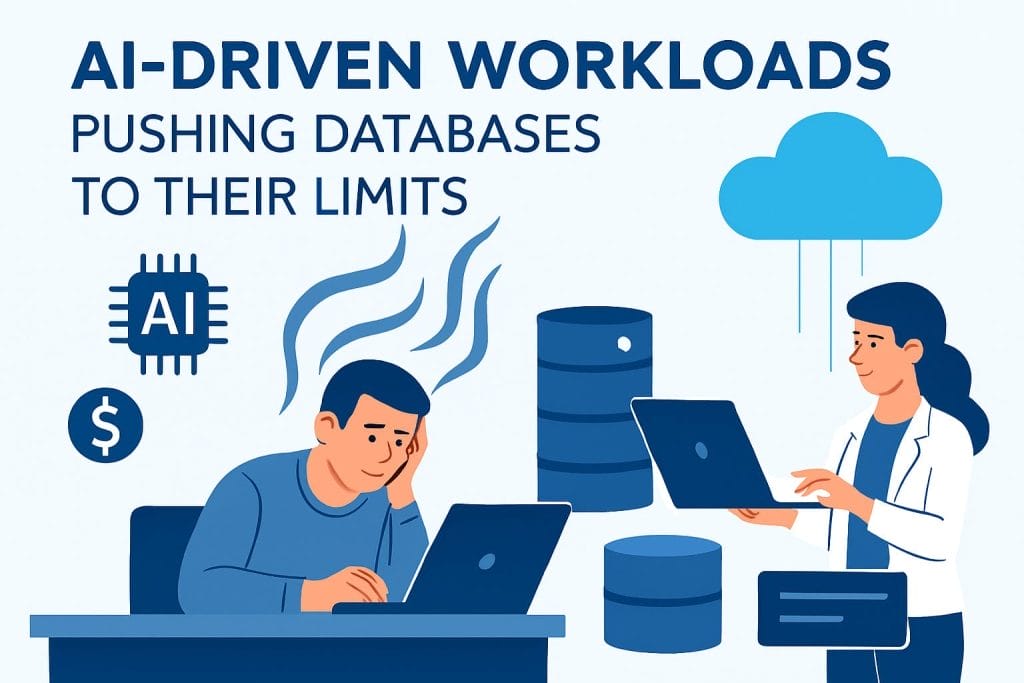
Why AI Workloads Stress Databases
● Massive datasets — training and inference combine structured data with unstructured inputs such as logs, images, and IoT signals.
● Complex queries — advanced analytics, joins, and aggregations generate significantly heavier demand than standard operations.
● Unpredictable demand — retraining cycles, inference bursts, and large-scale deployments create spikes that overwhelm capacity.
The Hidden Costs of Bottlenecks
When AI workloads push databases to their limits, the consequences extend beyond technical performance. Bottlenecks often translate directly into business risks:
-
Delayed innovation — slower training cycles delay time-to-market for new AI features.
-
Rising cloud costs — organizations overprovision compute and storage to mask inefficiencies.
-
Operational risks — outages and latency spikes erode customer trust and brand reputation.
-
Lost productivity — engineering teams are forced into reactive firefighting instead of building value-driven features.
These costs usually remain hidden until they escalate, making proactive database optimization a strategic necessity.
How Enteros Helps Tech Companies
Enteros offers a data-driven solution designed specifically for the complexity of AI and cloud-native workloads. Instead of simply generating alerts, Enteros applies AI-powered analytics to diagnose root causes of inefficiencies and directly link them to both performance and cost impact.
Key capabilities include:
-
AI-powered root cause analysis — identifies inefficient queries, misconfigurations, and resource bottlenecks across SQL and NoSQL environments.
-
SQL AI optimization — improves execution speed and reduces query overhead.
-
Integrated FinOps insights — connects workload inefficiencies to actual cloud spend and uncovers hidden waste.
-
Automated scaling support — ensures smooth retraining and inference cycles without overprovisioning resources.
This combination equips CIOs, CTOs, and data leaders with the visibility and control needed to balance performance, scalability, and cost efficiency.
Real-World Use Cases
Enteros is already helping organizations across the tech sector optimize their AI-driven operations:
-
AI startups — minimize infrastructure costs tied to inefficient queries, extending financial runway.
-
SaaS platforms — deliver faster recommendations and real-time personalization through database optimization.
-
Fintech providers — maintain uptime and performance for fraud detection and risk analysis during transaction spikes.
These scenarios illustrate how proactive database optimization enables businesses to scale AI adoption without compromising speed or financial sustainability.
Conclusion
AI workloads are redefining what enterprise databases must deliver. Without the right tools, organizations risk slower innovation, ballooning cloud costs, and infrastructure instability.
Enteros provides CIOs and CTOs with capabilities to reduce latency, optimize cloud spend, and support resilient AI operations — going beyond what traditional monitoring platforms typically deliver.
Frequently Asked Questions
Q1: Why do AI workloads stress databases more than traditional applications?
Because they involve massive datasets, complex queries, and unpredictable usage spikes.
Q2: Can Enteros improve database performance for ML model training?
Yes. By optimizing inefficient queries and resource allocation, it accelerates both training and inference cycles.
Q3: How does Enteros help manage AI cloud costs?
Through FinOps integration, it connects inefficiencies to cloud spend, detects hidden waste, and supports accurate forecasting.
Q4: Is Enteros compatible with both SQL and NoSQL databases?
Yes. The platform supports diverse environments, including SQL, NoSQL, and cloud-native infrastructures.
Q5: How is Enteros different from standard monitoring tools?
It goes beyond alerts by providing root cause diagnosis, cost attribution, and automated remediation — capabilities that traditional tools typically lack.
The views expressed on this blog are those of the author and do not necessarily reflect the opinions of Enteros Inc. This blog may contain links to the content of third-party sites. By providing such links, Enteros Inc. does not adopt, guarantee, approve, or endorse the information, views, or products available on such sites.
Are you interested in writing for Enteros’ Blog? Please send us a pitch!
RELATED POSTS
How AIOps and FinOps Optimize Cloud Database Performance for Banking and BFSI
- 31 August 2026
- Database Performance Management
Introduction The banking and financial services industry is undergoing a significant transformation as institutions move critical workloads to cloud and hybrid-cloud environments. Digital banking applications, payment platforms, mobile banking, lending systems, insurance applications, fraud detection platforms, wealth management solutions, and financial analytics increasingly depend on scalable cloud infrastructure and high-performing databases. However, cloud adoption introduces … Continue reading “How AIOps and FinOps Optimize Cloud Database Performance for Banking and BFSI”
How to Optimize Media and Entertainment Database Performance with Enteros Database Software, AI-Powered Analytics, and Database Observability
- 30 August 2026
- Database Performance Management
Introduction The media and entertainment industry has become a digital-first business. Streaming services, digital publishing, online gaming content, advertising platforms, social experiences, content management systems, subscription platforms, and personalized recommendations all depend on databases. Modern media companies process enormous volumes of customer, content, advertising, transaction, and behavioral information. Read more”Indian Country” highlights Enteros and its … Continue reading “How to Optimize Media and Entertainment Database Performance with Enteros Database Software, AI-Powered Analytics, and Database Observability”
How to Optimize Manufacturing Database Performance with Enteros Database Software, AIOps, and Predictive Analytics
Introduction Manufacturing is becoming increasingly dependent on digital infrastructure. Modern factories use enterprise resource planning (ERP), manufacturing execution systems (MES), supply-chain platforms, warehouse management systems, industrial IoT, quality management applications, predictive maintenance, and advanced analytics to manage production. Behind these systems are databases processing enormous amounts of operational information. Production schedules, inventory levels, machine data, … Continue reading “How to Optimize Manufacturing Database Performance with Enteros Database Software, AIOps, and Predictive Analytics”
The Future of Industry-Specific Cloud Optimization with AIOps, FinOps, and AI-Powered Database Management
- 28 August 2026
- Database Performance Management
Introduction Cloud computing has become a foundational component of digital transformation across industries. Banking organizations use cloud platforms to support digital payments and online banking. Healthcare providers rely on cloud infrastructure for digital health applications and patient services. Educational institutions operate learning management systems and virtual classrooms in the cloud. Retailers, manufacturers, insurers, logistics providers, … Continue reading “The Future of Industry-Specific Cloud Optimization with AIOps, FinOps, and AI-Powered Database Management”