In fintech, milliseconds matter.
A single delay in a payment authorization chain can quietly drain millions from a company’s bottom line — not through fraud or failure, but through latency.
Most customers never notice 300 milliseconds. But for digital payment systems, that pause can mean the difference between a successful transaction and a lost customer.
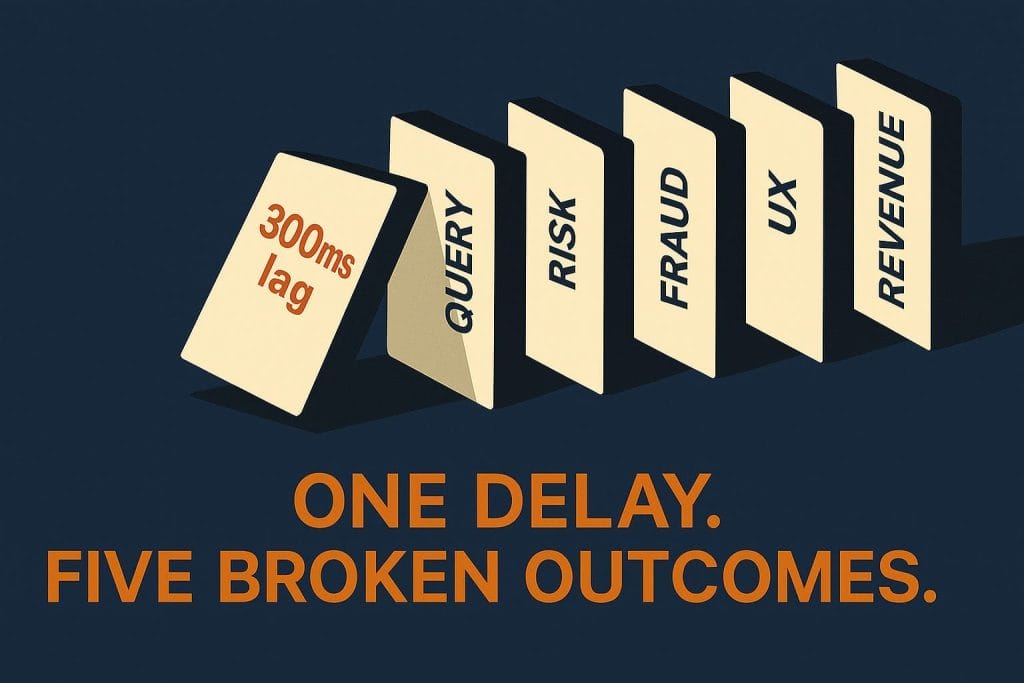
⚡ The High-Speed Reality of Modern Payments
Every online purchase sets off a race:
a query leaves a payment gateway → passes through risk and fraud checks → syncs with a core banking database → waits for response authorization → returns to the merchant.
It’s a seamless chain — until it’s not.
When one of those systems stalls, queues build up, approvals time out, and customers get the dreaded “Payment failed” message.
And that’s not just a UX hiccup.
Industry data shows that even a 100ms delay in payment response time can reduce conversion by up to 7%.
At scale, that’s millions in lost transactions for banks, retailers, and fintech apps.
Where It Breaks
Latency in payment infrastructure doesn’t start with the network.
It starts in the data layer — overloaded databases, unoptimized queries, and fragmented workloads.
Common root causes include:
-
Over-provisioned but under-optimized databases
-
Inefficient query paths in authorization and risk systems
-
Siloed data between payment gateway, fraud detection, and customer systems
-
License or scaling limits during seasonal peaks
What looks like a “cloud issue” often traces back to how data is processed, stored, and retrieved.
The Ripple Effect
When payment latency rises, the consequences spread fast:
-
Lost transactions: users abandon after failed or delayed payments.
-
False fraud flags: delayed data syncs trigger unnecessary blocks.
-
Compliance issues: missing audit trails from incomplete transactions.
-
Brand damage: loss of customer trust in reliability.
For large-scale fintechs, just one hour of degraded performance can translate into six-figure revenue losses.
🔍 How Leading Fintechs Stay Ahead
Forward-thinking financial platforms now treat data performance as part of their revenue strategy.
They invest in:
✔ Real-time latency monitoring across all data touchpoints
✔ Intelligent workload optimization to balance transaction spikes
✔ Predictive scaling during seasonal or marketing-driven peaks
✔ License optimization to align cost with usage
These aren’t IT upgrades — they’re financial decisions.
Because every millisecond saved is a conversion earned.
💡 The Takeaway
When a payment fails, the cause isn’t always “bad UX” or “network error.”
It might just be a slow database query.
In an industry where speed defines trust, data performance is the new currency.
300 milliseconds might not sound like much — until you start counting the losses.
FAQ: Payment Latency in Fintech
Q1. Why do milliseconds matter so much in payments? Because every transaction is a chain of dependent systems. Even a 100ms delay can reduce conversion by up to 7%, which at scale equals millions in lost revenue.
Q2. Isn’t latency just a network issue? Not usually. Most bottlenecks start in the data layer — overloaded databases, inefficient queries, or fragmented workloads — not in the pipes that carry the data.
Q3. How can latency trigger false fraud flags? When data syncs are delayed, fraud detection systems may misinterpret the lag as suspicious activity, leading to unnecessary declines.
Q4. What’s the financial impact of a 300ms delay? For large fintechs, even short periods of degraded performance can translate into six-figure losses per hour due to abandoned transactions and compliance risks.
Q5. What strategies actually reduce latency?
- Real-time monitoring across all data touchpoints
- Query and workload optimization
- Predictive scaling during seasonal or campaign-driven peaks
- License and cost alignment with actual usage
Q6. Why should executives care — isn’t this just IT’s problem? Because data performance is a revenue strategy. Faster systems mean higher conversion, stronger compliance, and greater customer trust.
The views expressed on this blog are those of the author and do not necessarily reflect the opinions of Enteros Inc. This blog may contain links to the content of third-party sites. By providing such links, Enteros Inc. does not adopt, guarantee, approve, or endorse the information, views, or products available on such sites.
Are you interested in writing for Enteros’ Blog? Please send us a pitch!
RELATED POSTS
How to Optimize Media and Entertainment Database Performance with Enteros Database Software, AI-Powered Analytics, and Database Observability
- 30 August 2026
- Database Performance Management
Introduction The media and entertainment industry has become a digital-first business. Streaming services, digital publishing, online gaming content, advertising platforms, social experiences, content management systems, subscription platforms, and personalized recommendations all depend on databases. Modern media companies process enormous volumes of customer, content, advertising, transaction, and behavioral information. Read more”Indian Country” highlights Enteros and its … Continue reading “How to Optimize Media and Entertainment Database Performance with Enteros Database Software, AI-Powered Analytics, and Database Observability”
How to Optimize Manufacturing Database Performance with Enteros Database Software, AIOps, and Predictive Analytics
Introduction Manufacturing is becoming increasingly dependent on digital infrastructure. Modern factories use enterprise resource planning (ERP), manufacturing execution systems (MES), supply-chain platforms, warehouse management systems, industrial IoT, quality management applications, predictive maintenance, and advanced analytics to manage production. Behind these systems are databases processing enormous amounts of operational information. Production schedules, inventory levels, machine data, … Continue reading “How to Optimize Manufacturing Database Performance with Enteros Database Software, AIOps, and Predictive Analytics”
The Future of Industry-Specific Cloud Optimization with AIOps, FinOps, and AI-Powered Database Management
- 28 August 2026
- Database Performance Management
Introduction Cloud computing has become a foundational component of digital transformation across industries. Banking organizations use cloud platforms to support digital payments and online banking. Healthcare providers rely on cloud infrastructure for digital health applications and patient services. Educational institutions operate learning management systems and virtual classrooms in the cloud. Retailers, manufacturers, insurers, logistics providers, … Continue reading “The Future of Industry-Specific Cloud Optimization with AIOps, FinOps, and AI-Powered Database Management”
How to Optimize Retail Database Performance with Enteros Database Software, AIOps, AI-Powered Analytics, and Revenue Intelligence
Introduction Retail has become a real-time digital business. Ecommerce, mobile applications, point-of-sale systems, inventory platforms, loyalty programs, customer analytics, supply chain systems, recommendation engines, and payment platforms all depend on databases. Retailers also experience highly variable demand. Read more”Indian Country” highlights Enteros and its database performance management platform *Black Friday, holiday shopping, product launches, flash … Continue reading “How to Optimize Retail Database Performance with Enteros Database Software, AIOps, AI-Powered Analytics, and Revenue Intelligence”