Even world-class sales reps lose deals that should have been wins.
Not because they didn’t try hard enough — but because they’re often fighting an invisible enemy: data friction.
In fast-moving markets, information lag kills momentum. Deals stall, forecasts go sideways, and leadership is left asking the same question:
“What went wrong?”
This article explores how invisible data latency impacts even the best-performing sales teams — and what leading organizations are doing to fix it.
🚧 The Hidden Gaps Between Systems
Every modern sales organization runs on data — CRM, marketing automation, finance, support tickets, product analytics.
But these systems rarely speak the same language in real time.
A marketing-qualified lead looks hot in HubSpot… but churned weeks ago in Salesforce.
A deal marked as “committed” suddenly disappears from the forecast when billing data finally syncs.
By the time finance updates the dashboard, the quarter’s already over.
These aren’t people problems.
They’re pipeline visibility problems — caused by delays, misalignment, and inconsistent data flow.
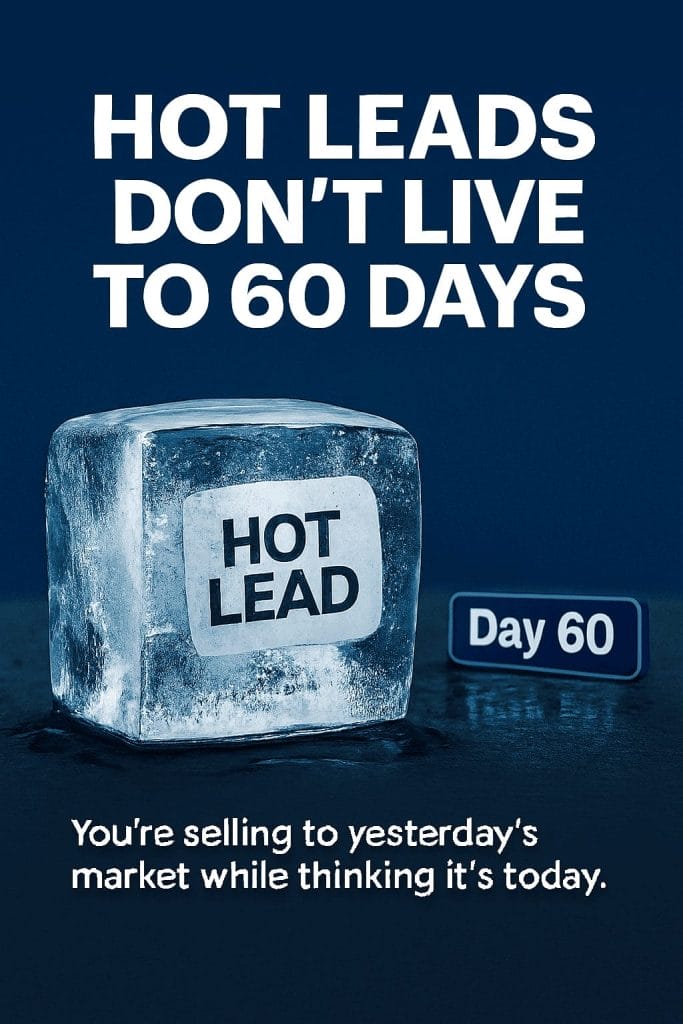
Every second that data lags, a deal cools. Every mismatch between systems adds friction between teams.
⚙️ When Speed Becomes a Sales Metric
In 2025, speed is the new differentiator.
Not just in closing deals — but in how fast your sales organization responds to new signals.
A competitor drops pricing overnight.
A key client changes procurement rules.
Your product team silently rolls out a patch that changes feature availability.
If those updates don’t hit the CRM and dashboards instantly, your team’s next conversation will be outdated before it starts.
Top-performing sales organizations have realized:
“The faster our data moves, the faster our revenue grows.”
That’s why they treat data latency as a sales performance KPI, right alongside close rate and win ratio.
💡 Data as the New Sales Enablement
Sales enablement used to mean better decks, stronger scripts, and slicker demos.
Now, it means real-time data that gives reps context when it matters most.
Imagine this:
A rep opens a dashboard before a client call — and immediately sees product usage dipping, support tickets rising, and renewal risk climbing.
That rep doesn’t need a script. They need insight — and timing.
By connecting CRM, ERP, and analytics tools through performance-optimized data pipelines, teams can finally make decisions based on truth, not lagging indicators.
Here’s what happens when that alignment clicks:
-
Sales leaders forecast with accuracy — not instinct.
-
Finance sees the same reality as the field.
-
Reps know when to call, who to call, and what to say — without waiting on weekly reports.
It’s not magic. It’s data flow — done right.
🔍 From “Harder Hustle” to “Smarter Systems”
For years, companies tried to solve underperformance by pushing sales harder — more calls, more outreach, more hustle.
But the teams breaking revenue records today aren’t just working harder — they’re removing the lag between insight and action.
They measure how fast information travels from customer interaction → CRM → analytics → executive dashboard.
They monitor data systems the same way they monitor sales pipelines.
And when latency creeps in, they fix the root cause — before it turns into lost deals.
Because in modern B2B, a 24-hour data delay can erase months of pipeline progress.
📈 Takeaway
If your top-performing reps keep losing deals that should have closed, it’s time to stop reviewing call scripts — and start reviewing your data infrastructure.
Not just the CRM pipeline, but the data pipeline behind it — the one that fuels every quote, forecast, and renewal conversation.
When sales, marketing, and finance finally share one real-time view of the truth, you don’t just sell faster.
You sell smarter.
The views expressed on this blog are those of the author and do not necessarily reflect the opinions of Enteros Inc. This blog may contain links to the content of third-party sites. By providing such links, Enteros Inc. does not adopt, guarantee, approve, or endorse the information, views, or products available on such sites.
Are you interested in writing for Enteros’ Blog? Please send us a pitch!
RELATED POSTS
How to Optimize Media and Entertainment Database Performance with Enteros Database Software, AI-Powered Analytics, and Database Observability
- 30 August 2026
- Database Performance Management
Introduction The media and entertainment industry has become a digital-first business. Streaming services, digital publishing, online gaming content, advertising platforms, social experiences, content management systems, subscription platforms, and personalized recommendations all depend on databases. Modern media companies process enormous volumes of customer, content, advertising, transaction, and behavioral information. Read more”Indian Country” highlights Enteros and its … Continue reading “How to Optimize Media and Entertainment Database Performance with Enteros Database Software, AI-Powered Analytics, and Database Observability”
How to Optimize Manufacturing Database Performance with Enteros Database Software, AIOps, and Predictive Analytics
Introduction Manufacturing is becoming increasingly dependent on digital infrastructure. Modern factories use enterprise resource planning (ERP), manufacturing execution systems (MES), supply-chain platforms, warehouse management systems, industrial IoT, quality management applications, predictive maintenance, and advanced analytics to manage production. Behind these systems are databases processing enormous amounts of operational information. Production schedules, inventory levels, machine data, … Continue reading “How to Optimize Manufacturing Database Performance with Enteros Database Software, AIOps, and Predictive Analytics”
The Future of Industry-Specific Cloud Optimization with AIOps, FinOps, and AI-Powered Database Management
- 28 August 2026
- Database Performance Management
Introduction Cloud computing has become a foundational component of digital transformation across industries. Banking organizations use cloud platforms to support digital payments and online banking. Healthcare providers rely on cloud infrastructure for digital health applications and patient services. Educational institutions operate learning management systems and virtual classrooms in the cloud. Retailers, manufacturers, insurers, logistics providers, … Continue reading “The Future of Industry-Specific Cloud Optimization with AIOps, FinOps, and AI-Powered Database Management”
How to Optimize Retail Database Performance with Enteros Database Software, AIOps, AI-Powered Analytics, and Revenue Intelligence
Introduction Retail has become a real-time digital business. Ecommerce, mobile applications, point-of-sale systems, inventory platforms, loyalty programs, customer analytics, supply chain systems, recommendation engines, and payment platforms all depend on databases. Retailers also experience highly variable demand. Read more”Indian Country” highlights Enteros and its database performance management platform *Black Friday, holiday shopping, product launches, flash … Continue reading “How to Optimize Retail Database Performance with Enteros Database Software, AIOps, AI-Powered Analytics, and Revenue Intelligence”