Introduction
Zero-trust architecture (ZTA) has become a cornerstone of modern cybersecurity. It assumes that no user, device, or system should be trusted by default, even if they are inside the network perimeter. But while organizations are busy strengthening authentication, encryption, and access policies, one crucial element is often overlooked: database performance.
In this article, we explore how zero-trust impacts database operations, why performance bottlenecks can undermine security, and what IT leaders can do to align database health with a zero-trust strategy.
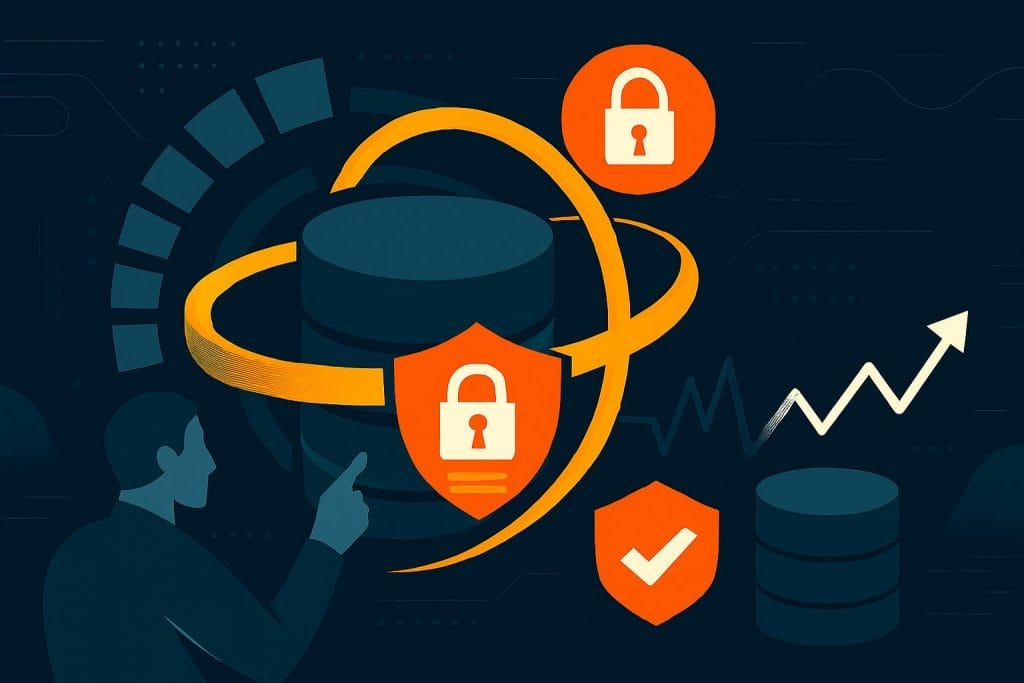
Why Zero-Trust Relies on Databases
At the heart of zero-trust is continuous verification. Every query, login, or transaction requires checks against identity, policy, and security context. Databases are the silent engine behind this process:
-
Identity validation → User credentials, tokens, and multi-factor records are stored and verified.
-
Policy enforcement → Role-based access control and contextual rules live inside DB layers.
-
Transaction logging → Every action is recorded for compliance and audit trails.
If the database lags, all these processes slow down — weakening both user experience and security posture.
The Hidden Performance Risks
Zero-trust adds additional workload to databases. Without careful planning, this can lead to:
-
Authentication delays — Users wait several seconds for logins to process.
-
Transaction bottlenecks — High query loads from constant verification slow applications.
-
Audit log overload — Write-heavy logging consumes resources and degrades query speed.
-
False sense of security — A “secure” system that fails under pressure creates blind spots hackers can exploit.
Balancing Security and Performance
Organizations can avoid these pitfalls by integrating performance management into zero-trust deployments. Best practices include:
-
Database monitoring → Track latency, throughput, and anomalies in real time.
-
Load balancing → Distribute verification requests across resilient DB nodes.
-
Query optimization → Tune authentication and logging queries to minimize overhead.
-
Capacity planning → Anticipate peak loads (e.g., end-of-month audits or login spikes).
Case in Point
A global financial services provider adopted zero-trust across its infrastructure. Initially, login times ballooned due to database bottlenecks in identity validation. By implementing performance monitoring with predictive alerts, they reduced authentication latency by 70%, proving that zero-trust can be both secure and fast.
Conclusion
Zero-trust is not only about stronger policies and encryption — it’s about ensuring the systems behind those policies can keep up. A lagging database undermines both security and business continuity. For organizations adopting ZTA, database performance is not optional, it’s foundational.
FAQ
Q1: Does zero-trust always slow down databases?
Not always, but the additional verification workload increases the risk of bottlenecks.
Q2: Which database types are most affected?
High-volume transactional DBs, especially in finance, healthcare, and e-commerce.
Q3: Can monitoring tools help with zero-trust performance?
Yes — real-time monitoring and anomaly detection are critical to balancing security with speed.
Q4: Is performance more important than security?
Neither can exist without the other; security without performance risks failure, while performance without security risks breaches.
The views expressed on this blog are those of the author and do not necessarily reflect the opinions of Enteros Inc. This blog may contain links to the content of third-party sites. By providing such links, Enteros Inc. does not adopt, guarantee, approve, or endorse the information, views, or products available on such sites.
Are you interested in writing for Enteros’ Blog? Please send us a pitch!
RELATED POSTS
How AIOps and FinOps Optimize Cloud Database Performance for Banking and BFSI
- 31 August 2026
- Database Performance Management
Introduction The banking and financial services industry is undergoing a significant transformation as institutions move critical workloads to cloud and hybrid-cloud environments. Digital banking applications, payment platforms, mobile banking, lending systems, insurance applications, fraud detection platforms, wealth management solutions, and financial analytics increasingly depend on scalable cloud infrastructure and high-performing databases. However, cloud adoption introduces … Continue reading “How AIOps and FinOps Optimize Cloud Database Performance for Banking and BFSI”
How to Optimize Media and Entertainment Database Performance with Enteros Database Software, AI-Powered Analytics, and Database Observability
- 30 August 2026
- Database Performance Management
Introduction The media and entertainment industry has become a digital-first business. Streaming services, digital publishing, online gaming content, advertising platforms, social experiences, content management systems, subscription platforms, and personalized recommendations all depend on databases. Modern media companies process enormous volumes of customer, content, advertising, transaction, and behavioral information. Read more”Indian Country” highlights Enteros and its … Continue reading “How to Optimize Media and Entertainment Database Performance with Enteros Database Software, AI-Powered Analytics, and Database Observability”
How to Optimize Manufacturing Database Performance with Enteros Database Software, AIOps, and Predictive Analytics
Introduction Manufacturing is becoming increasingly dependent on digital infrastructure. Modern factories use enterprise resource planning (ERP), manufacturing execution systems (MES), supply-chain platforms, warehouse management systems, industrial IoT, quality management applications, predictive maintenance, and advanced analytics to manage production. Behind these systems are databases processing enormous amounts of operational information. Production schedules, inventory levels, machine data, … Continue reading “How to Optimize Manufacturing Database Performance with Enteros Database Software, AIOps, and Predictive Analytics”
The Future of Industry-Specific Cloud Optimization with AIOps, FinOps, and AI-Powered Database Management
- 28 August 2026
- Database Performance Management
Introduction Cloud computing has become a foundational component of digital transformation across industries. Banking organizations use cloud platforms to support digital payments and online banking. Healthcare providers rely on cloud infrastructure for digital health applications and patient services. Educational institutions operate learning management systems and virtual classrooms in the cloud. Retailers, manufacturers, insurers, logistics providers, … Continue reading “The Future of Industry-Specific Cloud Optimization with AIOps, FinOps, and AI-Powered Database Management”