📍 The Incident
In late 2024, a regional utility company in Northern Europe experienced an unexpected power disruption.
Not because of a storm.
Not because of an overload.
But because two monitoring systems were five seconds out of sync.
Those five seconds cost the company 19 million euros in operational losses and emergency response.
When analysts reconstructed the event, the findings were startling:
the infrastructure was solid — but the data wasn’t.
⚙️ What Actually Happened
The company operated one of the most advanced smart grid systems in Europe.
It collected millions of sensor readings every minute across turbines, substations, and control centers.
But as the grid grew, so did its data complexity:
-
Sensor data was streaming in at different intervals (from 100ms to 5s).
-
A legacy data warehouse couldn’t handle the influx.
-
Some control dashboards were running on cached data up to 7 minutes old.
When a surge occurred in one substation, the AI prediction model didn’t flag it in time — because it was working with stale readings.
The result: cascading disconnects across multiple zones.
No explosions.
No errors.
Just silence.
The Bigger Lesson
This case exposed a blind spot shared by many utilities:
modern grids aren’t just physical networks — they’re real-time data ecosystems.
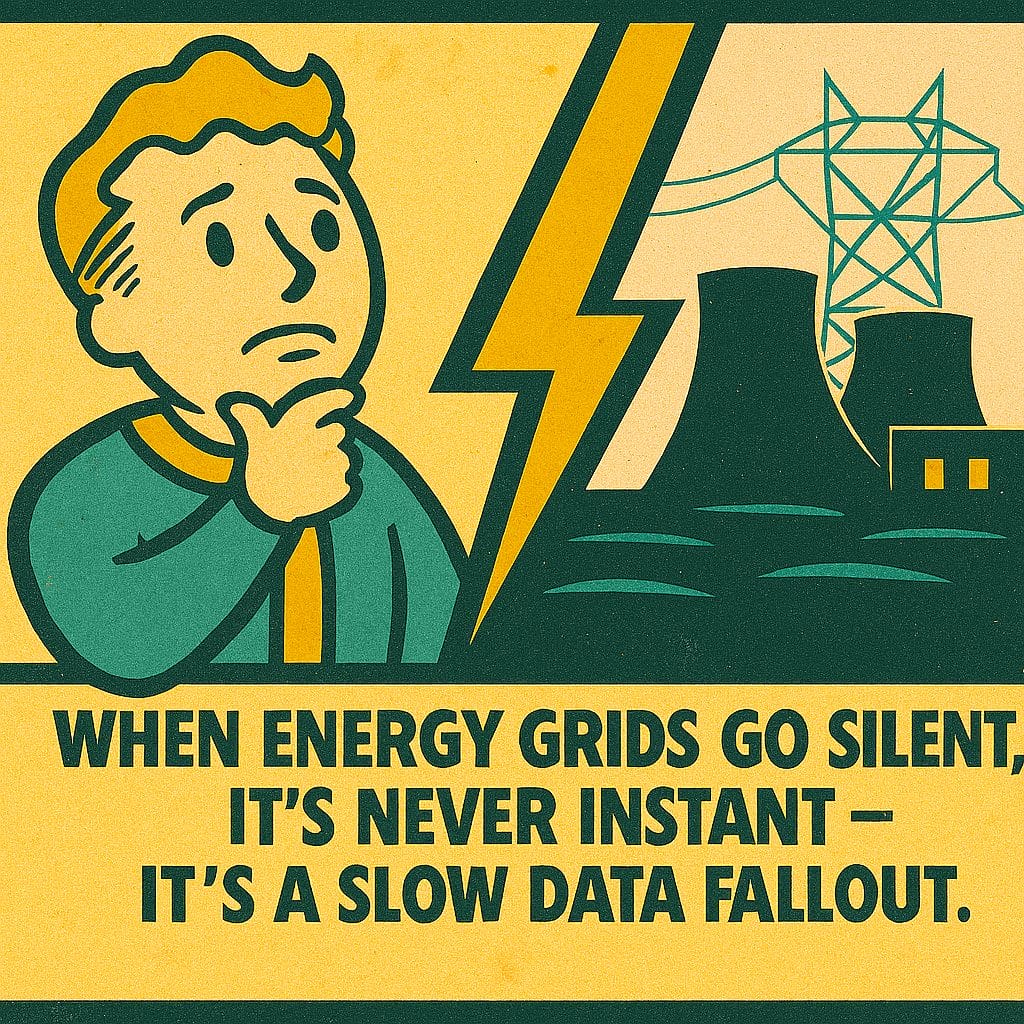
And when data slows, systems don’t fail instantly — they drift.
Operations become reactive instead of predictive.
Forecasting turns from insight into hindsight.
It’s not a cybersecurity issue.
It’s a data performance issue.
⚡ Why Data Performance Matters
In large-scale energy networks, milliseconds matter.
They separate a smooth load balance from a blackout cascade.
According to 2025 grid reliability reports:
-
67% of operational failures now involve data synchronization errors.
-
42% of predictive models underperform due to delayed data refreshes.
-
Utilities with optimized data pipelines recover from outages 4x faster.
That’s why data latency is becoming the new “invisible outage.”
From Resilience to Intelligence
Leading energy providers are now investing not just in hardware — but in database performance optimization.
By rethinking how their data refreshes, caches, and scales, they’re building systems where:
-
Performance bottlenecks are detected automatically,
-
Data lag is reduced by up to 80%,
-
Forecast models run in near real time.
One such transformation used Enteros UpBeat to uncover latency patterns that traditional monitoring missed — improving sync rates by 73% across distributed data clusters.
The impact wasn’t just technical.
It translated into:
-
Faster outage detection (from 7 minutes to under 40 seconds)
-
More accurate energy demand forecasting
-
25% fewer false alarms in predictive maintenance
💡 The Takeaway
In 2025, energy resilience isn’t just about stronger grids — it’s about smarter data.
Every blackout starts somewhere.
But in the digital era, it often starts with a timestamp that never caught up.
FAQ
Q1: How can data lag cause real-world blackouts?
A delay in control signals or mismatched sensor data can create false stability — systems react too late, triggering automated shutdowns or overloads.
Q2: Can AI models prevent such issues?
Only if they’re fed real-time data. AI trained on outdated or inconsistent input can amplify risk instead of mitigating it.
Q3: What’s the fastest way to detect hidden data bottlenecks?
Performance analytics platforms like Enteros UpBeat identify unusual latency across databases, enabling proactive correction before impact.
Q4: Is this problem unique to energy?
Not at all. Similar data synchronization issues affect aviation, logistics, finance, and healthcare — anywhere milliseconds matter.
🔗 Read more:
👉 How Enteros UpBeat helps energy leaders build data resilience
The views expressed on this blog are those of the author and do not necessarily reflect the opinions of Enteros Inc. This blog may contain links to the content of third-party sites. By providing such links, Enteros Inc. does not adopt, guarantee, approve, or endorse the information, views, or products available on such sites.
Are you interested in writing for Enteros’ Blog? Please send us a pitch!
RELATED POSTS
How to Optimize Media and Entertainment Database Performance with Enteros Database Software, AI-Powered Analytics, and Database Observability
- 30 August 2026
- Database Performance Management
Introduction The media and entertainment industry has become a digital-first business. Streaming services, digital publishing, online gaming content, advertising platforms, social experiences, content management systems, subscription platforms, and personalized recommendations all depend on databases. Modern media companies process enormous volumes of customer, content, advertising, transaction, and behavioral information. Read more”Indian Country” highlights Enteros and its … Continue reading “How to Optimize Media and Entertainment Database Performance with Enteros Database Software, AI-Powered Analytics, and Database Observability”
How to Optimize Manufacturing Database Performance with Enteros Database Software, AIOps, and Predictive Analytics
Introduction Manufacturing is becoming increasingly dependent on digital infrastructure. Modern factories use enterprise resource planning (ERP), manufacturing execution systems (MES), supply-chain platforms, warehouse management systems, industrial IoT, quality management applications, predictive maintenance, and advanced analytics to manage production. Behind these systems are databases processing enormous amounts of operational information. Production schedules, inventory levels, machine data, … Continue reading “How to Optimize Manufacturing Database Performance with Enteros Database Software, AIOps, and Predictive Analytics”
The Future of Industry-Specific Cloud Optimization with AIOps, FinOps, and AI-Powered Database Management
- 28 August 2026
- Database Performance Management
Introduction Cloud computing has become a foundational component of digital transformation across industries. Banking organizations use cloud platforms to support digital payments and online banking. Healthcare providers rely on cloud infrastructure for digital health applications and patient services. Educational institutions operate learning management systems and virtual classrooms in the cloud. Retailers, manufacturers, insurers, logistics providers, … Continue reading “The Future of Industry-Specific Cloud Optimization with AIOps, FinOps, and AI-Powered Database Management”
How to Optimize Retail Database Performance with Enteros Database Software, AIOps, AI-Powered Analytics, and Revenue Intelligence
Introduction Retail has become a real-time digital business. Ecommerce, mobile applications, point-of-sale systems, inventory platforms, loyalty programs, customer analytics, supply chain systems, recommendation engines, and payment platforms all depend on databases. Retailers also experience highly variable demand. Read more”Indian Country” highlights Enteros and its database performance management platform *Black Friday, holiday shopping, product launches, flash … Continue reading “How to Optimize Retail Database Performance with Enteros Database Software, AIOps, AI-Powered Analytics, and Revenue Intelligence”